
PMK | Automated Test Equipment Probes
- Home
- PMK | Automated Test Equipment Probes
Categories
- PMK | High Voltage Differential Probes
- PMK | Optically-Isolated Probes
- PMK | Ultra-Fast Current Shunt UFCS
- PMK | AC/DC Current Probes
- PMK | Rogowski Coil Current Probes
- PMK | Wide-band Current Transformers
- PMK | High-Speed Probes: differential | single-ended
- PMK | Active Voltage Probes
- PMK | High Temperature Probes
- PMK | High Voltage Passive Probes
- PMK | Passive Probes
- PMK | Positioners
- PMK | Measurement Accessories
- PMK | Calibration Generators
- PMK | Pulse Generators
- PMK | High-Voltage Devices
- PMK | Probe Accessories
- Iwatsu | Curve Tracers
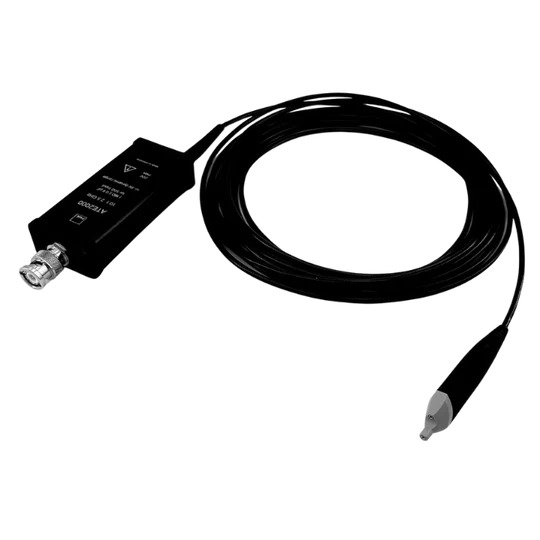
The ATE2000 is a high-ban...
PMK Automated Test Equipment (ATE) Probes: Precision for High-Volume Testing Welcome to Revinetech's dedicated category for PMK Autom...
PMK Automated Test Equipment (ATE) Probes: Precision for High-Volume Testing
Welcome to Revinetech's dedicated category for PMK Automated Test Equipment (ATE) Probes. In high-volume manufacturing, semiconductor testing, and quality assurance, the test process must be fast, repeatable, and non-intrusive. PMK ATE probes are meticulously engineered to provide reliable, high-fidelity signal acquisition within automated environments, delivering superior performance for both high-speed digital and power electronics testing. These probes are the critical link that ensures consistent, accurate measurements across thousands of test cycles.
You are seeking robust, durable probes designed for automated handling, precise synchronization, and minimal maintenance in demanding production settings. Our selection features the complete range of PMK ATE solutions, including specialized probes with remote control interfaces, high-bandwidth differential inputs, and fixed-installation connectivity. Trust Revinetech to provide the genuine PMK ATE probe that delivers certified longevity, superior signal integrity, and the essential durability required for maximizing the uptime and throughput of your automated test systems.
Why PMK ATE Probes Excel in Production Environments
PMK understands that probes used in ATE systems face unique challenges related to mechanical stress, high cycle counts, and the need for flawless repeatability that standard bench probes cannot meet.
Designed for Durability and Automated Handling
The longevity and maintenance-free design of PMK ATE probes are paramount for production line efficiency:
-
High Cycle Life: Probes are built with robust, high-durability materials and connections that withstand the thousands of mechanical contacts required in high-volume automated testing, minimizing maintenance downtime.
-
Remote Control and Monitoring: Many ATE probes feature integrated control interfaces that allow the test system to remotely manage attenuation, offset, and calibration, ensuring precise test execution without human intervention.
-
Consistent Performance: Engineered for flawless repeatability, the probes maintain their specified bandwidth and signal fidelity across their entire operational lifespan, guaranteeing reliable measurements across production batches.
Precision and Signal Integrity in ATE
ATE probes must maintain pristine signal fidelity while minimizing impact on the measured circuit, often in close proximity to other test components:
-
Low Input Capacitance: Probes are designed with ultra-low input capacitance, which is critical for probing sensitive, high-impedance circuit nodes (like in semiconductor testing) without altering the device's behavior or introducing measurement artifacts.
-
Wide Bandwidth: Specialized active differential and single-ended probes support the high bandwidths necessary for accurately analyzing fast switching edges and high-frequency digital data lines in a complex test rack.
-
Minimal Cross-Talk: The mechanical and electrical design of the probes minimizes external interference and cross-talk between adjacent test channels, crucial when high channel density is required.
Exploring the PMK ATE Probe Categories
Our catalogue features the specialized lines of PMK ATE probes, categorized by their operation mode, signaling type, and integration method.
Active Differential Probes for ATE
These probes are essential for automated testing of high-speed serial data and power electronics:
-
High CMRR: Optimized for maximum Common Mode Rejection Ratio, ensuring the automated system accurately measures the true differential signal while suppressing common-mode noise generated by the test environment.
-
Automated Control: Features external control inputs for managing probe settings via the ATE control software, streamlining test sequence automation.
-
Fixture Integration: Designed for secure, reliable integration into custom test fixtures and probe cards used in automated wafer-level or component testing.
High-Speed Single-Ended Probes for ATE
These probes are crucial for automated testing of clocks, timing signals, and single-ended I/O:
-
Low Loading: Providing high input impedance and ultra-low capacitance, essential for probing sensitive nodes in digital ICs and circuit boards without loading the signal source.
-
Wide Dynamic Range: Offering the necessary voltage range and linearity for general-purpose digital and analog debugging tasks within the automated rack.
Specialized Connectivity and Accessories
PMK offers various specialized accessories to optimize probe integration within the ATE:
-
Solder-In Leads and Adapters: High-quality, low-inductance solder-in heads and adapters designed for permanent, repeatable connection to small surface-mount test points (SMT) on the DUT board.
-
Remote Powering Solutions: External power management units that ensure stable, clean power delivery to all active probes within the test rack.
-
Mechanically Robust Tips: Probe tips and connections built to endure the repetitive contact and positional stress of automated handlers and manipulators.
Integrated Features for ATE Efficiency and Reliability
PMK ensures its ATE probes incorporate features that streamline workflow, improve data accuracy, and guarantee operational continuity.
-
Automatic Probe Identification: Select probes communicate their attenuation ratio and model type to compatible oscilloscopes or acquisition systems, ensuring correct scaling and readout automatically.
-
Integrated Diagnostics: Built-in features allow the ATE software to verify the health and functionality of the probe before commencing a test sequence, preventing erroneous measurements.
-
Calibration and Certification: High precision and comprehensive calibration documentation are provided, ensuring the measurement results are traceable and verifiable for compliance auditing.
Partner with Revinetech for PMK ATE Assurance
Selecting the ideal PMK ATE Probe requires assessing the required bandwidth (GHz), the operating mode (differential vs. single-ended), and the necessary mechanical durability and automated control interface. Revinetech is your authorized source for the complete PMK probe portfolio. Our technical specialists are ready to assist you in matching the certified performance, high cycle longevity, and automation features of the right PMK ATE probe to your specific manufacturing and high-volume test demands.
Maximize your test throughput with guaranteed signal fidelity. Browse our catalogue of PMK Automated Test Equipment (ATE) Probes today, and contact us for expert advice and a personalized solution design.
Frequently Asked Questions (FAQs)
What is the key difference between a standard bench probe and an PMK ATE probe?
The key difference is durability and automation. An PMK ATE probe is specifically designed for high cycle counts, robotic handling, and integration with automated control software, featuring robust mechanical design and remote electronic control necessary for production line environments.
Why is mechanical robustness essential for an ATE probe?
Mechanical robustness is essential because the probe tips and connections endure thousands of repetitive contacts and positional movements during automated testing. A robust design ensures the probe maintains its specified electrical performance and physical integrity over a long operational lifetime, reducing maintenance and replacement costs.
How does an ATE probe handle automated control of its settings?
An ATE probe handles automated control via a dedicated communication interface or side channel (often digital I/O). The ATE control software sends commands to the probe to remotely switch attenuation ratios, activate offset compensation, or initiate internal calibration routines, ensuring precise measurement configuration for each test step.
What is the significance of "low loading" in semiconductor ATE testing?
"Low loading" (ultra-low input capacitance) is critical because the circuits being tested (e.g., outputs of an IC) are highly sensitive. Low input capacitance ensures the probe does not significantly alter the electrical characteristics of the test node, preventing inaccurate measurements of rise time, voltage levels, or even circuit malfunction.
Are PMK ATE probes suitable for testing high-speed differential serial buses?
Yes. PMK ATE probe portfolios include high-bandwidth differential probes specifically designed for automated testing of high-speed serial buses (like PCIe or MIPI), featuring high CMRR and low skew necessary for reliable differential signal analysis in ATE racks.