
.jpg)
.jpg)
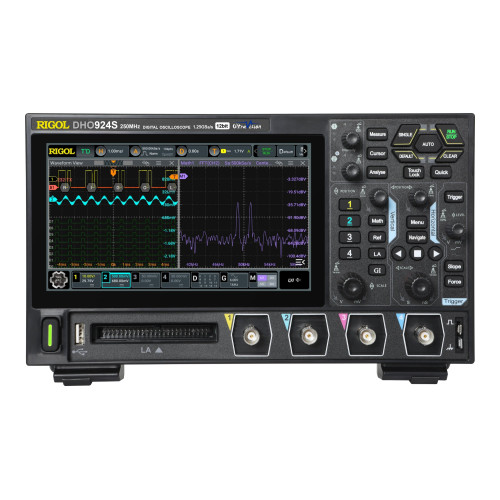
Rigol DHO914 12bit DSO 125MHz, 4ch.
Precision You Can Trust
NABL-Accredited Calibration | Available on Request
Rs. 84783.00
The RIGOL DHO914 is a 125 MHz, four-channel high-resolution digital oscilloscope designed for embedded-system debugging, power electronics, automotive testing, precision analogue measurement and R&D. It combines native 12-bit resolution, up to 1.25 GSa/s real-time sampling, 50 Mpts maximum memory, UltraAcquire capture up to 1,000,000 wfms/s and optional 16-channel logic analysis on a 7-inch capacitive touchscreen..
The RIGOL DHO914 Digital Oscilloscope is a compact, high-resolution test instrument developed for engineers, technicians, research laboratories, electronics manufacturers and educational institutions.
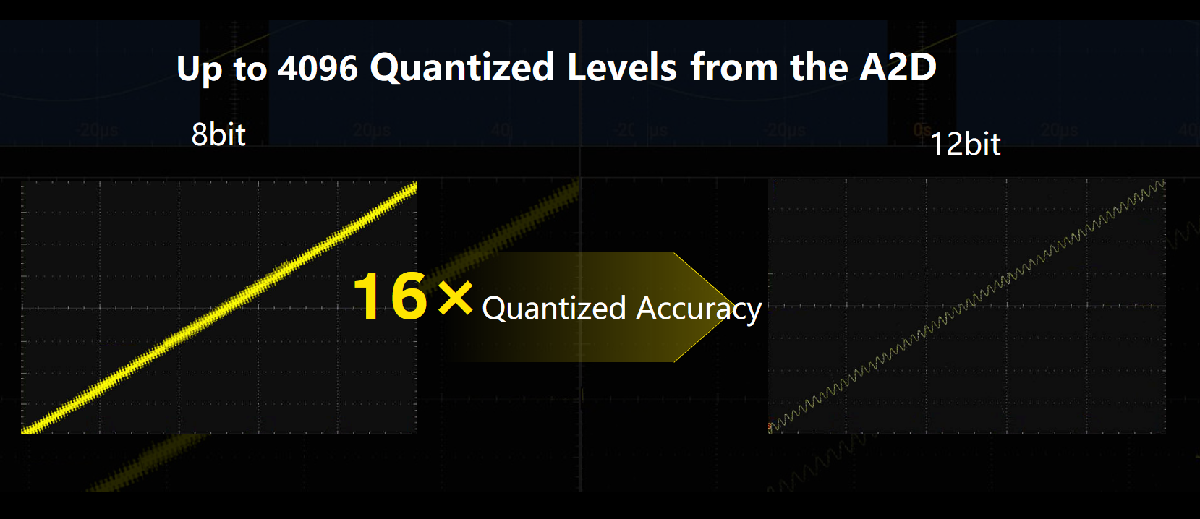
It provides four analogue channels with 125 MHz bandwidth and uses a native 12-bit analogue-to-digital converter. Compared with a conventional 8-bit oscilloscope, the DHO914 provides 4,096 vertical quantisation levels instead of 256. This allows engineers to observe smaller voltage variations, ripple, noise, overshoot and distortion in greater detail.
Built on RIGOL’s Centaurus technology platform, the DHO914 combines high-resolution acquisition, deep memory, fast waveform capture, serial bus analysis and mixed-signal capability in a lightweight instrument suitable for laboratory and field use.
125 MHz Analogue Bandwidth
The DHO914 provides 125 MHz analogue bandwidth across four input channels.
It is suitable for analysing:
- Embedded controller signals
- Microcontroller and FPGA clocks
- PWM and pulse waveforms
- Sensor and actuator outputs
- Switching power-supply signals
- Analogue amplifier circuits
- Power-rail ripple
- Communication interfaces
- Timing and phase relationships
- General electronics faults
The typical rise time is 2.8 ns or less. Actual measurement performance also depends on probe bandwidth, source impedance, signal connection and grounding method.
Native 12-Bit Vertical Resolution
The DHO914 uses native 12-bit analogue-to-digital conversion.
Key measurement benefits include:
- 4,096 vertical quantisation levels
- Sixteen times more levels than an 8-bit oscilloscope
- Improved visibility of low-amplitude signals
- Better ripple and noise analysis
- More detailed waveform representation
- Improved measurement of small signals on larger DC levels
This makes the DHO914 suitable for:
- Power integrity testing
- Sensor signal measurement
- Low-noise analogue circuit development
- Audio electronics
- Battery-management systems
- Reference-voltage testing
- Medical electronics development
- Precision power-supply measurements
Four Analogue Input Channels
The four-channel configuration allows engineers to monitor several related signals simultaneously.
Typical measurements include:
- Clock, data and enable lines
- Input and output waveforms
- Voltage and current signals
- Multiple power rails
- Sensor output and controller response
- Gate-drive and switching-node signals
- Reference and measured signals
- Multi-stage start-up sequences
Four-channel acquisition is particularly useful when a fault involves several connected parts of a circuit.
Channel-Dependent Real-Time Sampling
The maximum real-time sample rate depends on the number of active analogue channels:
- 1.25 GSa/s with one channel active
- 625 MSa/s per channel with two channels active
- 312.5 MSa/s per channel with three or four channels active
Engineers should consider the active-channel configuration when capturing fast waveforms.
The oscilloscope bandwidth, sample rate, probe bandwidth and signal rise time collectively determine measurement accuracy.
Deep Acquisition Memory
The DHO914 provides a maximum analogue memory depth of 50 Mpts.
Memory allocation depends on the number of enabled analogue channels:
- 50 Mpts with one channel active
- 25 Mpts per channel with two channels active
- 10 Mpts per channel with three or four channels active
Deep memory allows users to capture longer signal intervals while retaining useful waveform detail.
It is beneficial for:
- Long serial communication packets
- Power-supply start-up sequences
- PWM and control-loop analysis
- Embedded-system timing measurements
- Intermittent fault investigation
- Long pulse trains
- Motor-drive testing
- Production validation
Search and navigation functions help users locate specific events within long acquisitions.
UltraAcquire Waveform Capture
The DHO914 supports UltraAcquire mode, which provides a maximum waveform capture rate of up to 1,000,000 waveforms per second.
The standard vector-mode capture rate reaches up to 30,000 wfms/s.
Fast waveform capture improves the probability of detecting:
- Short glitches
- Runt pulses
- Timing violations
- Signal dropouts
- Unstable waveform edges
- Abnormal switching behaviour
- Intermittent communication errors
- Power disturbances
The digital phosphor display uses 256-level intensity grading to distinguish frequent waveform behaviour from rare events.
Hardware Waveform Recording and Playback
The oscilloscope supports hardware waveform recording and playback for up to 500,000 frames.
This function allows users to:
- Record successive waveform events
- Replay captured waveforms
- Review events frame by frame
- Compare normal and abnormal signals
- Perform measurements during playback
- Decode recorded bus activity
- Investigate intermittent faults
- Analyse events preceding a failure
Hardware recording is useful when a problem occurs only after a long operating period or under specific load conditions.
Low-Level Signal Measurement
The DHO914 provides a vertical sensitivity range from:
- 200 µV/div to 10 V/div
The 200 µV/div and 500 µV/div settings are digitally magnified from the 1 mV/div range. This should be considered during precision accuracy calculations.
The low vertical scale supports:
- Power-supply ripple testing
- Sensor output measurement
- Amplifier noise analysis
- Reference-voltage testing
- Low-level analogue signals
- Small AC signals on DC rails
A selectable 20 MHz bandwidth limit can reduce unwanted high-frequency noise when full bandwidth is not required.
Standard 16-Channel Digital Capability
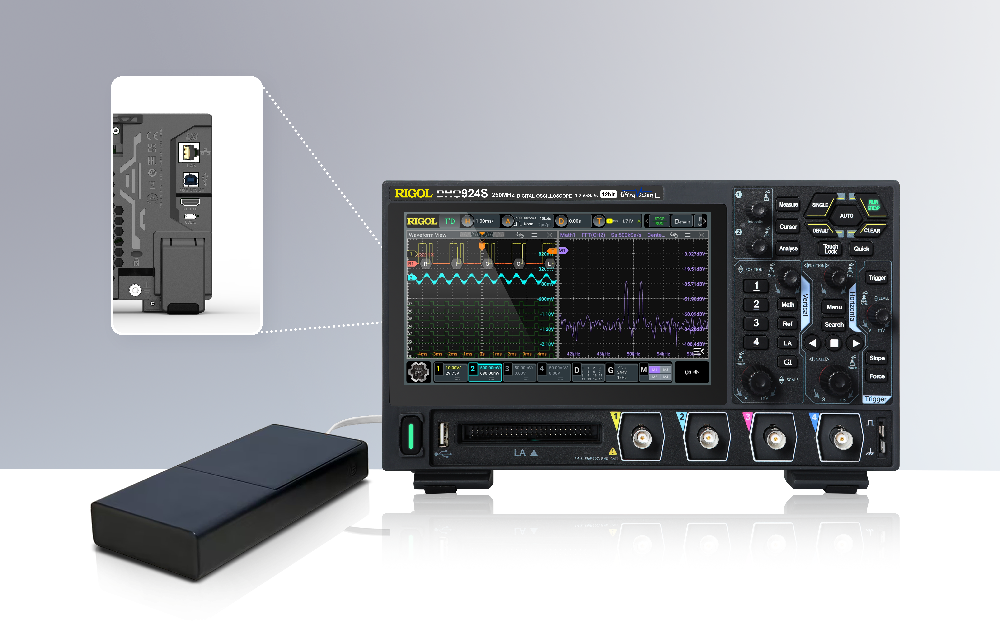
The DHO900 Series includes 16-channel digital-analysis capability as standard. Digital inputs D0 to D15 are accessed through the optional PLA2216 logic analyser probe.
Digital analysis supports:
- Microcontroller GPIO debugging
- FPGA and CPLD testing
- Parallel bus analysis
- Clock and data timing measurements
- Mixed analogue and digital debugging
- Digital control-system troubleshooting
- Protocol analysis using analogue or digital sources
The digital system supports:
- Sixteen digital input channels
- Maximum digital input frequency of 200 MHz
- Minimum detectable pulse width of 5 ns
- Two digital channel groups
- Predefined and user-adjustable logic thresholds
The PLA2216 probe is not included in the standard package and should be shown as an optional accessory.
Digital Logic Thresholds
Available digital threshold settings include:
- TTL
- 5 V CMOS
- 3.3 V CMOS
- 2.5 V CMOS
- 1.8 V CMOS
- ECL
- PECL
- LVDS
- 0 V
- User-defined threshold
The user-defined threshold range is ±15 V with 10 mV adjustment steps.
This supports testing of different embedded and industrial logic families.
Advanced Trigger Functions
The DHO914 provides a broad trigger system for isolating specific waveform conditions.
Trigger types include:
- Edge
- Pulse width
- Slope
- Video
- Pattern
- Duration
- Timeout
- Runt
- Window
- Delay
- Setup and hold
- Nth edge
- RS232/UART
- I2C
- SPI
- CAN
- LIN
Trigger sources can include analogue channels and digital channels when the logic probe is connected.
These trigger functions help engineers locate:
- Narrow pulses
- Missing transitions
- Timing errors
- Logic-pattern conditions
- Invalid communication events
- Abnormal voltage levels
- Intermittent circuit behaviour
Serial Bus Triggering and Decoding
The DHO914 supports serial protocol triggering and decoding for embedded and automotive applications.
Supported protocols include:
- RS232/UART
- I2C
- SPI
- CAN
- LIN
- Parallel bus decoding
Protocol information can be displayed directly on the waveform or in an event table.
This helps engineers identify:
- Missing acknowledgements
- Incorrect data
- Timing errors
- Communication interruptions
- Voltage-level problems
- Noise-related errors
- Physical-layer faults
Bus sources can be selected from the analogue channels or digital channels.
Waveform Measurements and Analysis
The oscilloscope provides automatic measurement and analysis functions for common engineering tasks.
Available capabilities include:
- Voltage measurements
- Time and frequency measurements
- Pulse-width measurements
- Rise and fall time
- Duty cycle
- Phase and delay
- Cursor measurements
- Measurement statistics
- Waveform mathematics
- FFT frequency-domain analysis
- Digital filtering
- Histogram analysis
- Mask testing
- Search and navigation
- Reference waveform comparison
These tools help users perform detailed waveform evaluation without repeatedly transferring data to external software.
FFT and Peak Search
The FFT function supports multiple window types, including:
- Rectangular
- Blackman-Harris
- Hanning
- Hamming
- Flattop
- Triangle
The peak-search function can identify up to 15 frequency peaks based on user-defined thresholds.
Typical FFT applications include:
- Harmonic analysis
- Switching-frequency measurement
- Clock-spectrum evaluation
- Noise-source identification
- EMI troubleshooting
- Detection of unwanted oscillations
Mask and Pass/Fail Testing
Pass/fail analysis compares the input waveform against a user-defined mask.
The function can display:
- Number of successful tests
- Number of failed tests
- Total test count
A pass/fail event can:
- Stop acquisition
- Activate the beeper
- Save a screenshot
- Generate an AUX output pulse
This is useful for repetitive production testing and waveform-quality validation.
Compact and Portable Design
The DHO914 measures approximately:
- 265.35 mm wide
- 161.75 mm high
- 77.38 mm deep
Its weight is approximately 1.78 kg without packaging.
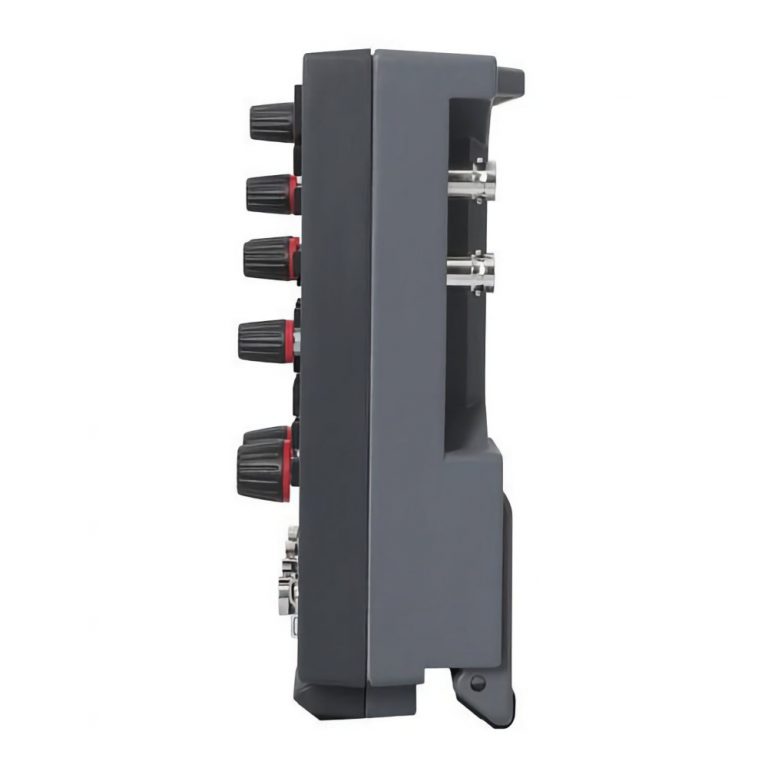
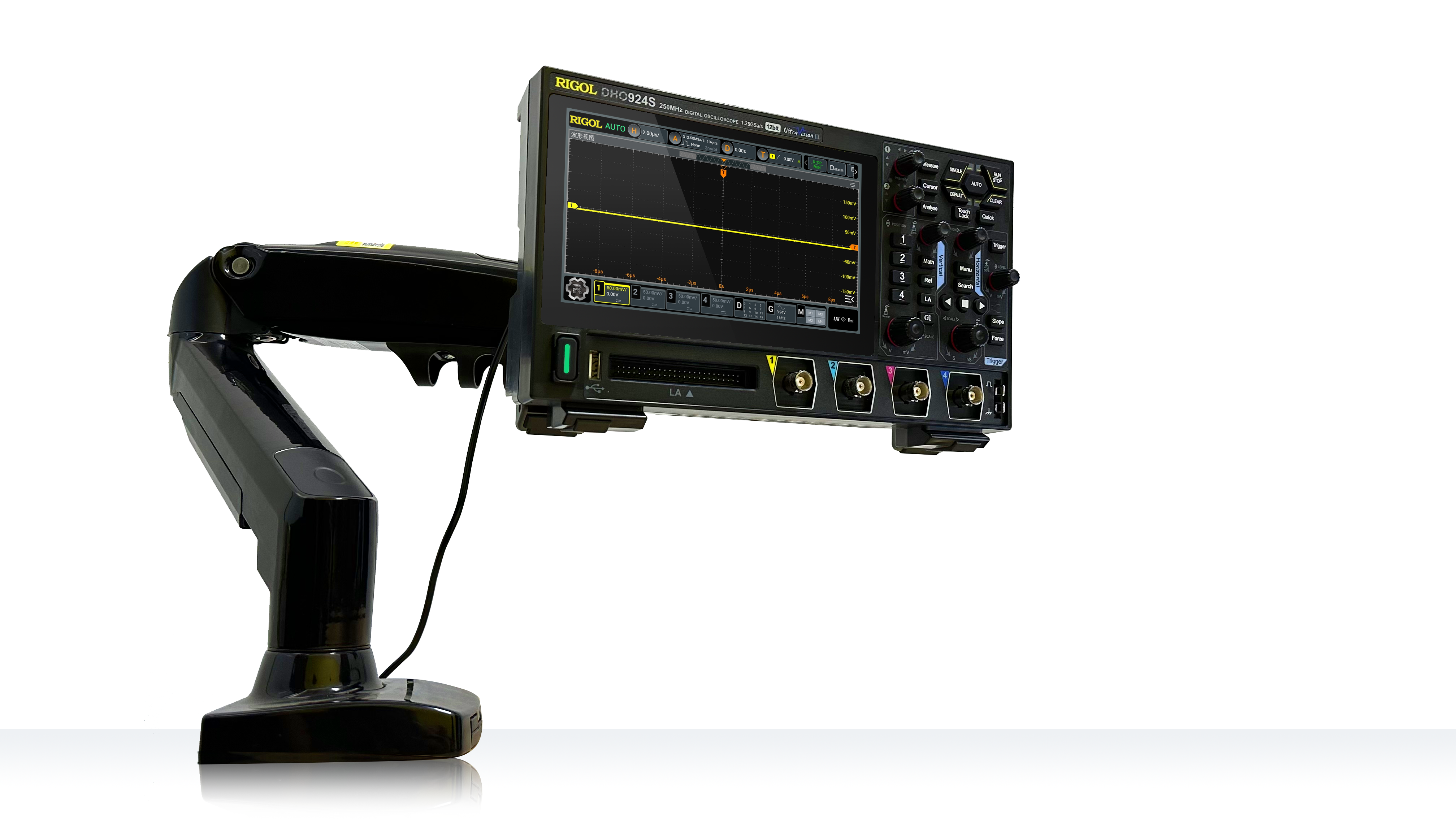
The compact enclosure supports VESA-compatible mounting, making it suitable for crowded laboratory benches, mobile test stations and field troubleshooting.
USB Type-C Power
The oscilloscope uses a USB Type-C power input rated at:
- 15 V DC
- 3 A
- Maximum power consumption of approximately 45 W
It can be powered using the supplied adaptor or a compatible USB Type-C power source that meets the voltage and current requirements.
This supports:
- Portable field testing
- Automotive troubleshooting
- Industrial maintenance
- Mobile laboratory work
- Remote equipment inspection
7-Inch Capacitive Touchscreen
The instrument includes:
- 7-inch capacitive multi-touch display
- 1024 × 600 resolution
- Gesture-based operation
- 256 intensity levels
- Adjustable persistence
- Flex Knob control
- External HDMI display support
The touchscreen can display waveforms, measurements, decoded buses and analysis results clearly.
Connectivity and Remote Control
Standard interfaces include:
- USB 2.0 Host
- USB 2.0 Device
- 10/100 LAN
- LXI-C support
- HDMI 1.4 output
- AUX output
- Web Control
- Probe compensation output
Web Control allows users to operate the oscilloscope through a compatible browser by entering the instrument’s IP address.
SCPI programming supports integration into automated test and production systems.
No Built-In Waveform Generator
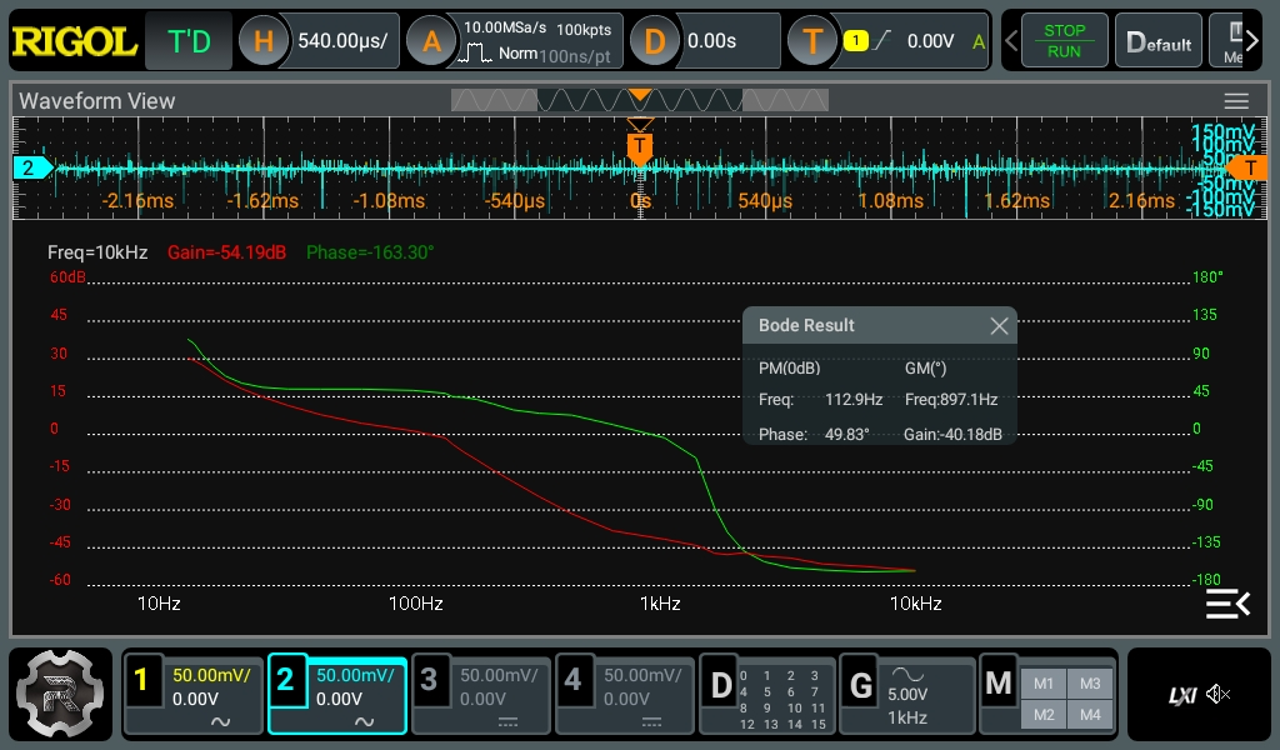
The DHO914 does not include a built-in arbitrary waveform generator or Bode plot function.
These functions are available only on the DHO914S model.
Users who require an integrated signal source or Bode plot testing should select the DHO914S instead of the standard DHO914.
Applications
The RIGOL DHO914 is suitable for:
- Embedded-system development
- Microcontroller debugging
- FPGA and CPLD testing
- Mixed-signal circuit analysis
- Power electronics testing
- Power-supply ripple analysis
- Automotive electronics
- CAN and LIN bus analysis
- Sensor and analogue circuit testing
- Audio electronics
- Signal-integrity troubleshooting
- Semiconductor testing
- Production-line validation
- Research and development
- Engineering education
- Field maintenance
Why Buy from RevineTech?
RevineTech supplies test and measurement equipment for electronics development, industrial testing, education, research and production applications.
Technical selection assistance can include:
- DHO914 configuration
- PLA2216 logic-probe selection
- Passive probe selection
- High-voltage differential probes
- Current probes
- Protocol-analysis requirements
- Calibration documentation
- VESA or rack-mount accessories
- Automated test integration