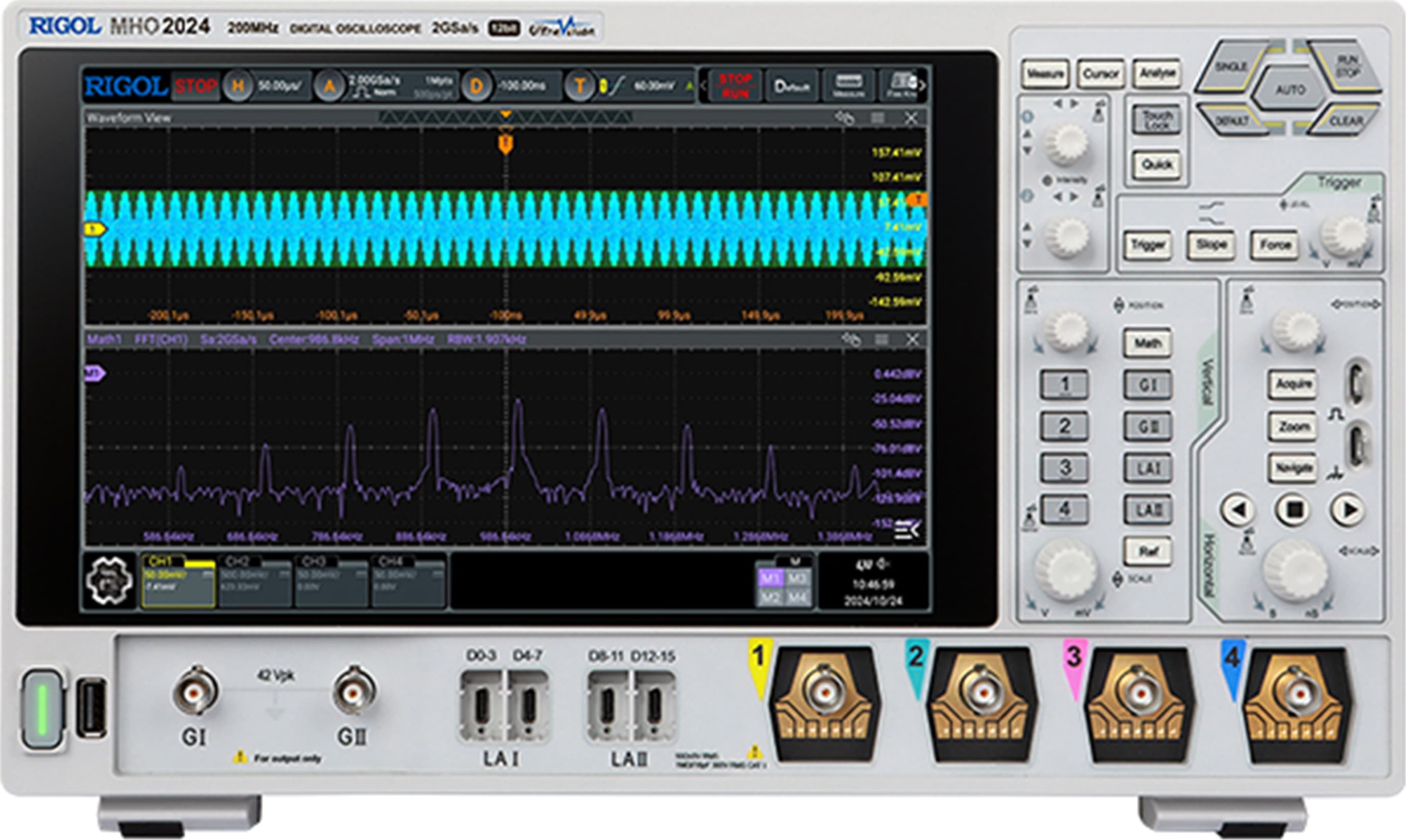
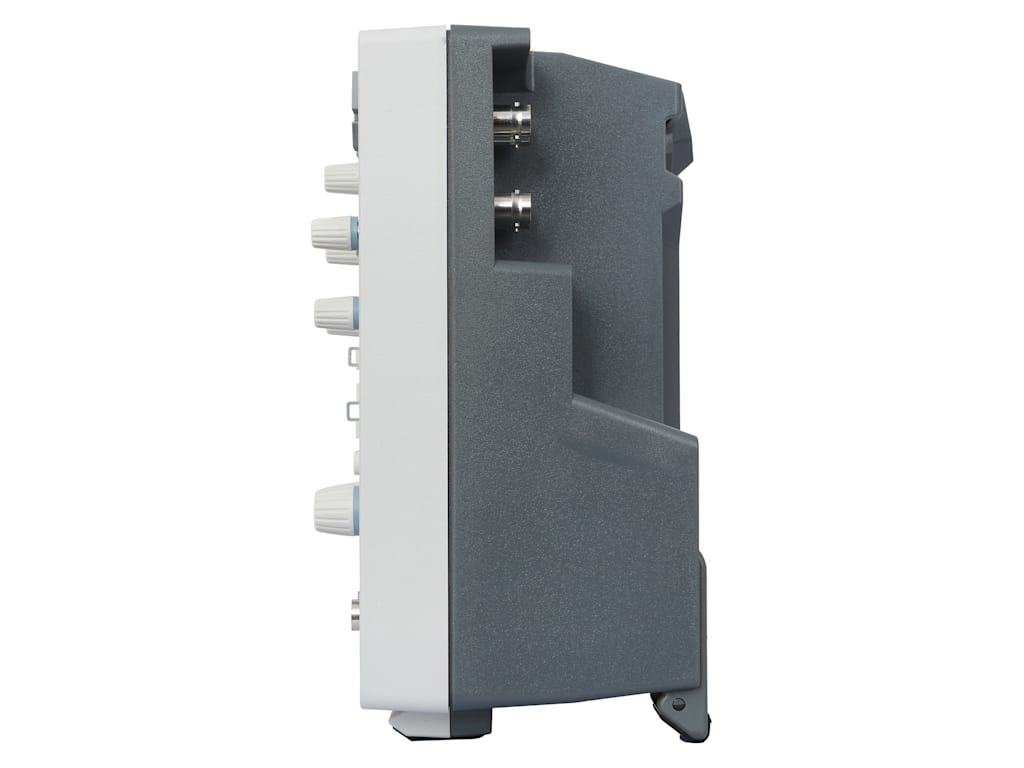
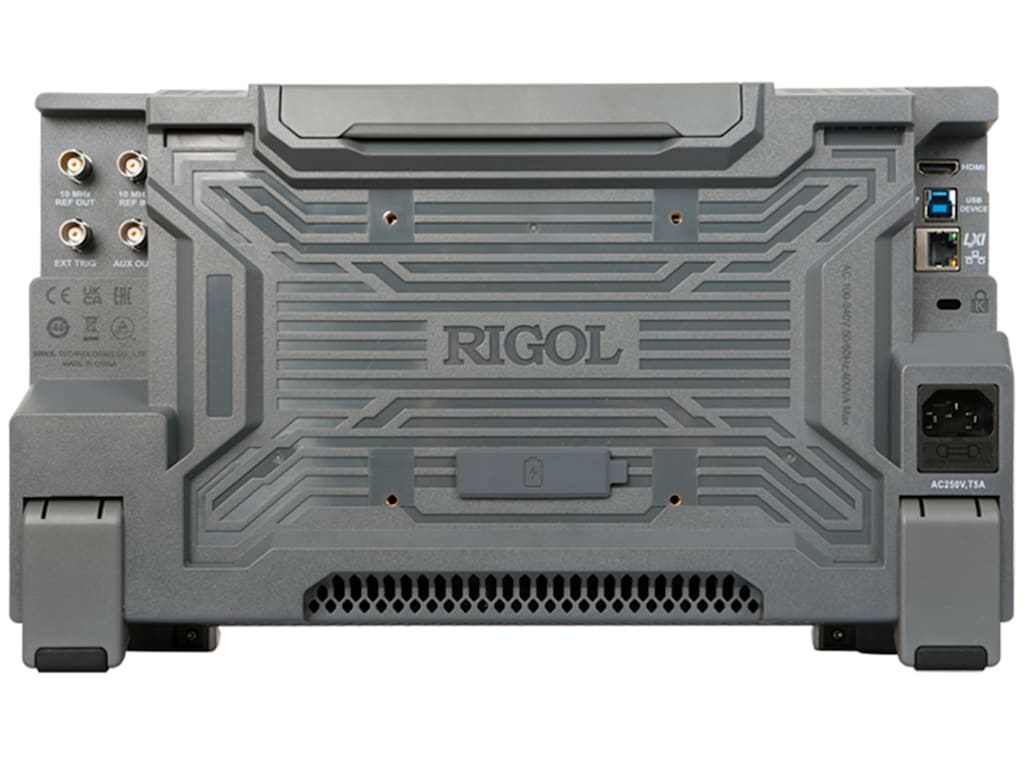
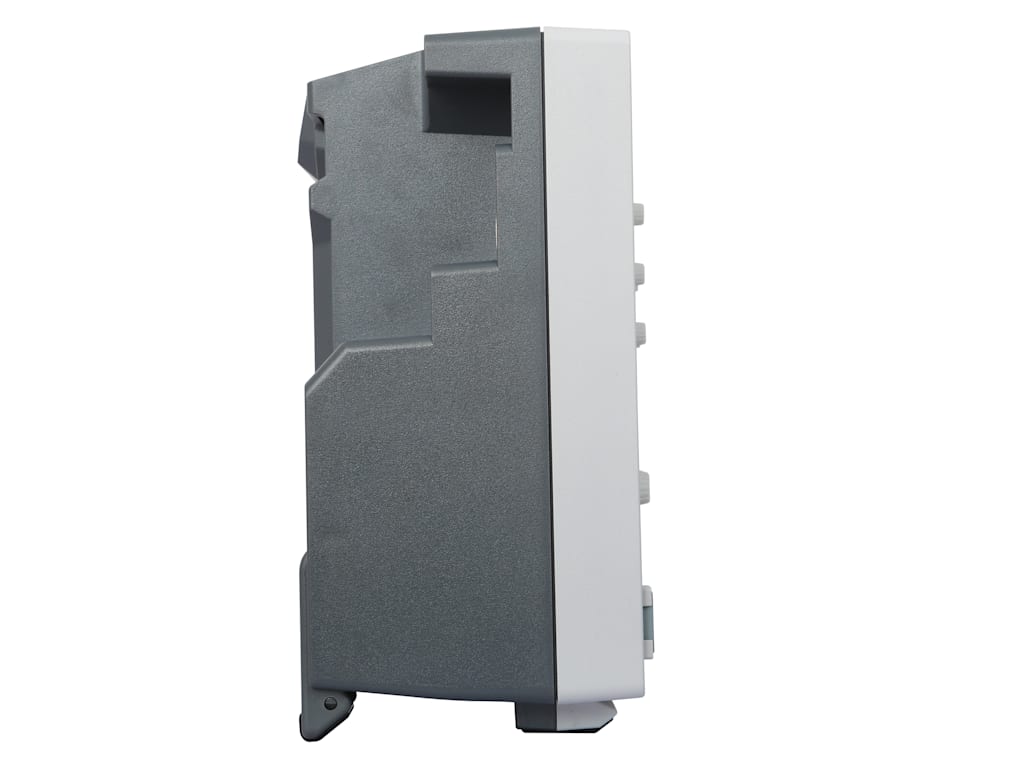
The RIGOL MHO2024 Mixed-Signal Oscilloscope is part of the MHO2000 Series of high-resolution oscilloscopes. It is designed for engineers, technicians, research laboratories, educational institutions and electronics manufacturers that need accurate analogue measurements together with digital and protocol analysis.
Built on RIGOL’s Centaurus high-resolution technology platform, the MHO2024 uses a 12-bit analogue-to-digital converter to provide 4,096 vertical quantisation levels. This delivers 16 times more amplitude levels than a conventional 8-bit oscilloscope, helping users observe small signal variations, low-level ripple and waveform details more clearly.
The MHO2024 provides:
- 200 MHz analogue bandwidth
- Four analogue input channels
- One external trigger input
- 16 digital channels with a compatible logic probe
- Up to 2 GSa/s real-time sampling
- Up to 500 Mpts memory depth
- Up to 1,000,000 wfms/s waveform capture
- 12-bit hardware vertical resolution
- Up to 16-bit processing in High Resolution mode
- 10.1-inch capacitive multi-touch display
The oscilloscope integrates analogue acquisition, digital logic analysis, protocol decoding, signal generation and advanced application tools within one expandable platform.
High-Resolution 12-Bit Acquisition
The MHO2024 uses a 12-bit analogue-to-digital converter, providing 4,096 discrete amplitude levels.
This high-resolution architecture helps engineers analyse:
- Power-supply ripple
- Sensor outputs
- Low-amplitude analogue signals
- Reference voltages
- Audio waveforms
- Power electronic signals
- Medical electronic circuits
- Small variations on larger waveforms
Compared with an 8-bit oscilloscope, the MHO2024 provides improved vertical detail and makes small waveform changes easier to distinguish.
High Resolution acquisition modes can further improve effective resolution up to 16 bits. Available bandwidth and sampling performance may be reduced when higher-resolution processing is selected.
200 MHz Analogue Bandwidth
The MHO2024 provides 200 MHz analogue bandwidth across four channels.
This bandwidth is suitable for:
- Embedded electronic systems
- Microcontroller signals
- Digital clocks
- Industrial control circuits
- Automotive communication buses
- Switching power supplies
- Analogue circuit testing
- Communication interface debugging
The 200 MHz bandwidth provides a typical 10% to 90% rise-time capability of approximately 1.75 ns under the specified measurement conditions.
Four Analogue Channels
The four analogue inputs allow engineers to observe several related signals in one time-correlated acquisition.
Typical four-channel measurements include:
- Input and output signals
- Clock, data and enable lines
- Multiple power rails
- Gate and drain waveforms
- Three-phase or multi-phase control signals
- Sensor and actuator signals
- Communication transmit and receive lines
A separate external trigger input is also available for triggering from a signal that does not need to occupy an analogue measurement channel.
Mixed-Signal Analysis
The MHO2024 supports 16 digital channels for mixed-signal debugging.
A compatible PLA3204 logic analysis probe is required to connect digital signals to the oscilloscope.
Mixed-signal analysis allows users to display analogue and digital signals on the same time base. It is useful for:
- Microcontroller debugging
- FPGA testing
- Parallel bus analysis
- ADC and DAC validation
- Embedded control systems
- Digital power systems
- Timing relationship analysis
- Analogue and digital event correlation
The digital-channel function is part of the MHO2000 platform, while the physical logic probe is selected separately.
Up to 2 GSa/s Real-Time Sampling
The MHO2024 supports a maximum real-time sampling rate of up to 2 GSa/s.
High-speed sampling helps preserve waveform detail when analysing:
- Fast edges
- Short pulses
- Clock signals
- Serial communication
- Switching transitions
- Overshoot and ringing
- Intermittent glitches
- Timing errors
The available sample rate may depend on the number of enabled channels and acquisition configuration.
Up to 500 Mpts Memory Depth
Deep acquisition memory of up to 500 Mpts allows engineers to record long signal sequences while retaining detailed sample information.
Deep memory is useful for:
- Long protocol captures
- Embedded-software debugging
- Power-up sequence analysis
- Intermittent fault investigation
- Long-duration signal monitoring
- Communication packet analysis
- Detailed waveform zooming
- Multi-cycle measurements
The available memory can depend on the number of active channels and selected acquisition mode.
Fast Waveform Capture
The MHO2024 provides a maximum waveform capture rate of up to 1,000,000 waveforms per second in fast acquisition mode.
A high capture rate reduces acquisition dead time and improves the probability of detecting:
- Rare glitches
- Runt pulses
- Signal dropouts
- Timing violations
- Intermittent noise
- Abnormal waveform transitions
- Unstable clock signals
- Occasional protocol errors
-
Waveform Recording and Playback
Hardware waveform recording allows a sequence of triggered waveform events to be stored and reviewed.
Users can:
- Record intermittent events
- Replay captured waveforms
- Review individual frames
- Compare normal and abnormal behaviour
- Search for specific waveform conditions
- Analyse events after a long test
This is useful for unattended testing, reliability analysis and debugging faults that do not occur during every acquisition.
Low-Noise Signal Measurement
The MHO2024 provides vertical sensitivity down to 200 μV/div, helping engineers analyse low-level signals and small ripple components.
Low-noise measurement applications include:
- Power-rail ripple
- Sensor outputs
- Audio signals
- Reference voltages
- Analogue control signals
- Low-level embedded signals
- Power-supply noise
Actual noise performance depends on bandwidth, probe selection, vertical range, sample rate and acquisition settings.
Serial Bus Triggering and Decoding
The MHO2024 supports serial protocol triggering and decoding for embedded, automotive, audio and aerospace applications.
Standard embedded protocol functions include:
Additional protocol options can include:
- CAN
- CAN FD
- LIN
- FlexRay
- SENT
- I2S
- MIL-STD-1553B
Decoded data is displayed together with the electrical waveform, helping engineers identify:
- Incorrect addresses
- Invalid data
- Missing acknowledgements
- Timing problems
- Frame errors
- Bus interruptions
- Intermittent communication faults
Advanced protocol availability depends on the installed software licences.
Advanced Trigger Functions
The oscilloscope provides trigger functions for capturing specific waveform conditions.
Available trigger types include:
- Edge
- Pulse width
- Slope
- Video
- Pattern
- Duration
- Timeout
- Runt
- Window
- Delay
- Setup and hold
- Nth edge
- Zone trigger
- Serial bus trigger
Zone triggering allows users to define a region directly on the waveform display and capture waveforms that enter or avoid that area.
Automatic Measurements and Analysis
The MHO2024 supports automatic waveform measurements and advanced analysis functions.
Available capabilities include:
- Voltage measurements
- Time measurements
- Frequency measurements
- Pulse measurements
- Channel delay
- Phase measurement
- Measurement statistics
- Cursor measurements
- FFT frequency analysis
- Waveform mathematics
- Mask testing
- Pass/fail testing
- Search and navigation
- Waveform recording and playback
These tools allow engineers to move from signal capture to fault analysis without transferring every waveform to separate software.
Optional Dual-Channel 50 MHz AWG
The optional MHO2000-AWG function adds a dual-channel function and arbitrary waveform generator to the oscilloscope.
The generator provides:
- Two output channels
- Maximum frequency up to 50 MHz
- 1 GSa/s sampling
- 16-bit vertical resolution
- Sine waveform
- Square waveform
- Pulse waveform
- Ramp waveform
- Noise
- DC output
- Built-in arbitrary waveforms
The AWG can be used for:
- Circuit stimulation
- Filter testing
- Amplifier testing
- Sensor simulation
- Clock generation
- Embedded-system debugging
- Frequency-response measurements
The integrated generator can reduce the need for a separate benchtop signal source during routine testing.
Bode Plot Analysis
With the optional built-in waveform generator, the MHO2024 can support Bode plot analysis.
Bode plot testing is useful for:
- Power-supply control-loop analysis
- Filter frequency-response testing
- Amplifier gain measurement
- Phase response analysis
- Crossover-frequency measurement
- Stability-margin evaluation
Suitable probes, test leads and an injection transformer may be required depending on the circuit under test.
Optional Power Analysis
The optional power-analysis package supports measurements for power supplies, converters and semiconductor switching devices.
Applications include:
- Power quality
- Switching loss
- Conduction loss
- Harmonic analysis
- Inrush current
- Output ripple
- Safe operating area
- Power-device evaluation
- Converter efficiency
- Modulation analysis
Compatible high-voltage differential probes and current probes should be selected according to the signal voltage, current, bandwidth and common-mode requirements.
Battery-Powered Operation
The MHO2000 platform supports operation using a compatible optional battery pack.
Battery operation is useful for:
- Field diagnostics
- Floating or isolated test setups
- Automotive servicing
- Portable laboratory work
- Measurements away from an AC outlet
- Temporary test installations
Battery availability, operating duration and charging requirements should be confirmed for the selected regional package.
10.1-Inch HD Touchscreen
The oscilloscope includes a 10.1-inch capacitive multi-touch display with a resolution of 1280 × 800 pixels.
The display supports:
- Waveform dragging
- Horizontal and vertical zoom
- Cursor positioning
- Menu navigation
- Measurement selection
- Protocol decode display
- Digital-channel display
- Multi-window analysis
- Waveform search and navigation
Physical knobs and buttons are also provided for conventional oscilloscope operation.
Connectivity and Remote Operation
Available interfaces include:
- USB Host
- USB Device
- LAN
- HDMI
- Auxiliary output
- External trigger input
- Probe compensation output
These interfaces support:
- USB storage
- PC communication
- Remote programming
- Network operation
- External display connection
- Automated test integration
- Screenshot and waveform transfer
-
Applications:
- Embedded-system development
- Microcontroller debugging
- FPGA validation
- Mixed-signal analysis
- Analogue circuit testing
- Digital timing analysis
- Serial protocol decoding
- Automotive electronics
- CAN and CAN FD testing
- Power electronics
- Power-supply development
- Sensor signal analysis
- Industrial control systems
- Medical electronics
- Research and development
- Production validation
- Educational laboratories
- Service and repair laboratories
- Field diagnostics
-
Why Buy from Revine Tech:
Revine Tech supplies oscilloscopes, logic probes, signal-generator options and electronic test equipment for engineering, industrial, research and educational applications.
Technical selection support can include:
- Oscilloscope bandwidth selection
- Analogue and digital channel requirements
- Logic probe selection
- Memory-depth requirements
- Embedded protocol analysis
- Automotive protocol options
- Power-analysis software
- Optional waveform generator
- Bode plot accessories
- Passive probe selection
- High-voltage differential probes
- Current probes
- Battery-pack requirements
- Remote-control integration
- Calibration and documentation
The final RIGOL MHO2024 price depends on the installed software options, logic probe, waveform generator, battery pack, measurement probes, accessories and calibration requirements.