
.jpg)
.jpg)
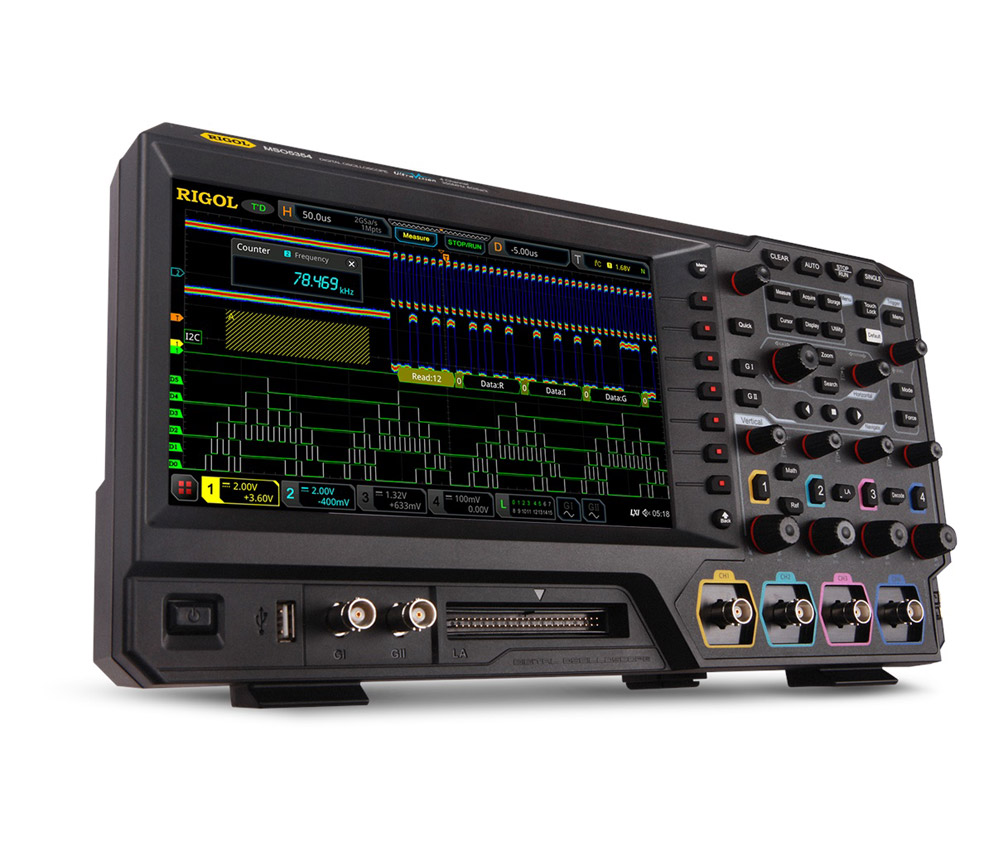
Rigol MSO5354
Precision You Can Trust
NABL-Accredited Calibration | Available on Request
Rs. 400000.00
The RIGOL MSO5354 is a 350 MHz, four-channel mixed-signal oscilloscope built for embedded design, power electronics, automotive testing and R&D. It delivers up to 8 GSa/s real-time sampling, 100 Mpts standard memory, optional expansion to 200 Mpts and waveform capture above 500,000 wfms/s. A 9-inch capacitive touchscreen, 16 digital-channel support and advanced analysis tools simplify complex debugging..
The RIGOL MSO5354 Digital Oscilloscope is the highest-bandwidth model in the MSO5000 Series. It combines 350 MHz analog bandwidth, four analog input channels and mixed-signal analysis capability in a compact benchtop instrument. Built on RIGOL UltraVision II technology, it is suitable for engineers working on embedded electronics, industrial control systems, automotive modules, communication interfaces, switching power supplies and electronic product development.
With a typical rise time of 1 ns or less, the MSO5354 can capture fast signal transitions, clock edges, switching behaviour and communication activity with greater detail than lower-bandwidth oscilloscopes. Its four analog channels allow users to examine several related signals simultaneously, including input and output waveforms, clock and data lines, gate-drive signals and control-loop behaviour.
High-Speed Sampling Across Multiple Channels
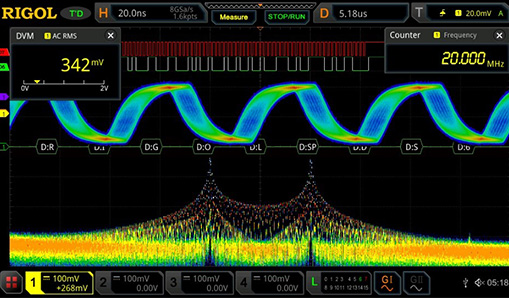
The RIGOL MSO5354 provides channel-dependent real-time sampling:
- 8 GSa/s when one analog channel is active
- 4 GSa/s per channel in half-channel mode
- 2 GSa/s per channel when all four analog channels are active
Channels 1 and 2 share one acquisition group, while Channels 3 and 4 form the second group. Half-channel operation means that only one channel from each acquisition group is enabled. This configuration gives engineers flexibility to balance channel count and sampling performance according to the measurement.
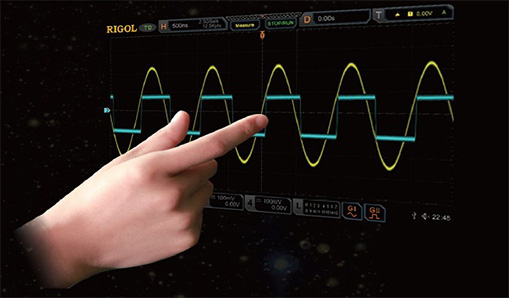
Deep Acquisition Memory
The oscilloscope includes 100 Mpts maximum standard memory depth, allocated according to the number of active channels:
- 100 Mpts with one channel active
- 50 Mpts per channel in half-channel mode
- 25 Mpts per channel with all four channels active
The optional MSO5000-2RL memory upgrade increases the maximum depth to:
- 200 Mpts with one channel active
- 100 Mpts per channel in half-channel mode
- 50 Mpts per channel with all four channels active
Deep memory helps retain a high sample rate during longer acquisitions. This is useful for analysing serial communication packets, power-supply start-up sequences, long control cycles and intermittent events.
Mixed-Signal Debugging
The MSO5354 includes logic-analyser capability for up to 16 digital channels. A RIGOL PLA2216 active logic probe is required to connect and acquire digital signals.
The digital channels provide:
- Up to 1 GSa/s digital sampling
- 25 Mpts digital memory depth
- 200 MHz maximum digital input frequency
- User-adjustable and predefined logic thresholds
- Mixed analog and digital triggering
- Parallel bus decoding up to 20 bits
This combination allows engineers to correlate analog circuit behaviour with digital control signals, making the oscilloscope suitable for microcontroller, FPGA, memory, sensor and embedded-system debugging.
Waveform Capture and Recording
A waveform capture rate above 500,000 waveforms per second improves the probability of detecting occasional glitches, runt pulses, timing errors and unstable waveform conditions.
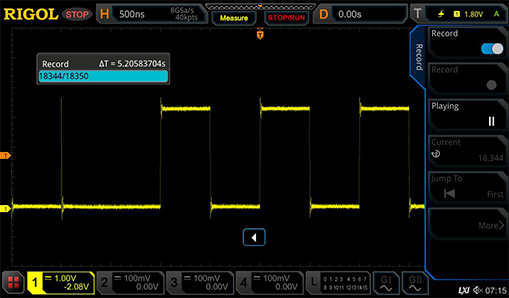
The hardware waveform recording function can store up to 450,000 triggered waveform frames using segmented memory. Recorded frames can be played continuously or reviewed individually, with measurement, calculation and decoding functions available during playback.
Measurement and Frequency-Domain Analysis
The RIGOL MSO5354 supports hardware full-memory measurements for 41 waveform parameters. It can display measurement statistics for up to ten selected items, helping users evaluate voltage, timing, frequency, pulse and phase characteristics.
Enhanced FFT analysis processes up to 1 Mpts of waveform data. Engineers can define centre frequency and span or start and stop frequencies, then use peak search to identify up to 15 frequency components. This is useful for observing harmonics, switching noise, interference and unwanted frequency components.
Triggering and Protocol Analysis
The MSO5354 provides standard trigger modes for isolating specific signal conditions:
- Edge
- Pulse
- Slope
- Video
- Pattern
- Duration
- Timeout
- Runt
- Window
- Delay
- Setup and hold
- Nth edge
- Zone trigger
Optional protocol packages support triggering and decoding for:
- RS232 and UART
- I2C
- SPI
- CAN
- LIN
- FlexRay
- I2S
- MIL-STD-1553
Up to four protocol buses can be decoded simultaneously when the appropriate options are installed. Parallel bus decoding is included as a standard function.
Optional Waveform Generator and Power Analysis
The MSO5354 contains two waveform-generator output channels that can be activated with the MSO5000-AWG software option. The optional generator provides:
- Maximum frequency of 25 MHz
- 200 MSa/s sampling
- 14-bit vertical resolution
- Sine, square, pulse, ramp, noise and DC waveforms
- Built-in and arbitrary waveform generation
- AM, FM and FSK modulation
- Sweep and burst output
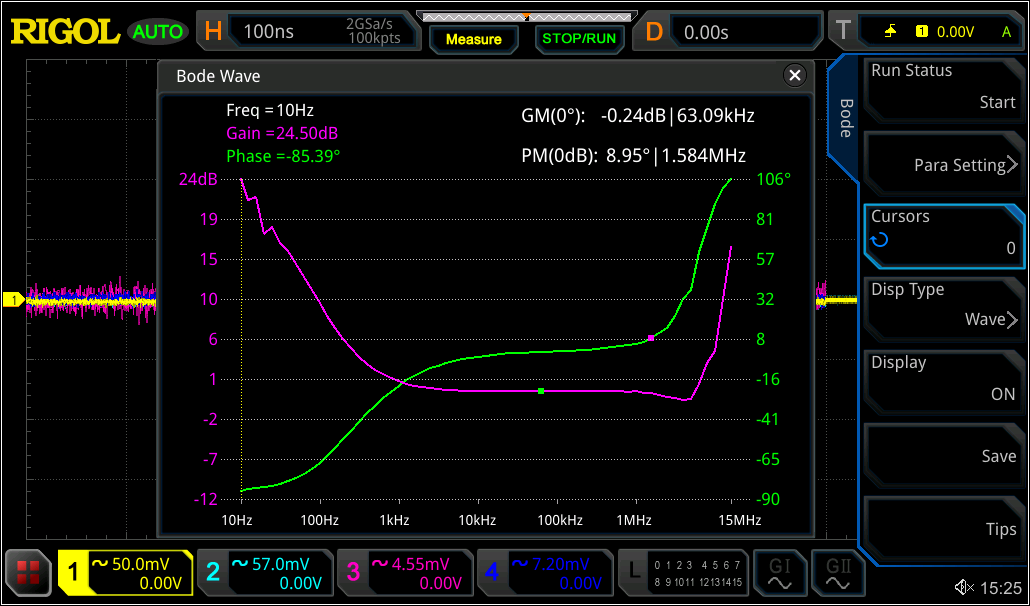
The waveform generator also supports Bode plot measurements for control-loop analysis. Optional power-analysis software can assist with power-quality and ripple measurements. These capabilities require the relevant software licence and suitable probes.
Applications
The RIGOL MSO5354 is suitable for:
- Embedded-system development and debugging
- Microcontroller and FPGA validation
- Automotive ECU and bus testing
- CAN and LIN communication analysis
- Industrial control-system testing
- Power-supply and converter analysis
- Switching waveform measurements
- Bode plot and control-loop analysis
- Signal-integrity investigation
- Serial protocol triggering and decoding
- EMI troubleshooting and frequency-domain analysis
- Semiconductor and component testing
- Production-line pass/fail testing
- Electronics research and development
- Engineering and educational laboratories
Why Buy from RevineTech?
RevineTech supplies test and measurement instruments for electronics development, industrial testing, research and production applications. Technical assistance is available for selecting the correct MSO5354 configuration, probes and software options.
Selection support can cover:
- Analog and digital probe requirements
- PLA2216 logic-probe selection
- Memory-depth upgrade
- Serial protocol packages
- Arbitrary waveform-generator activation
- Power-analysis software
- High-voltage differential probes
- Current probes
- Calibration and documentation requirements
The RIGOL MSO5354 price in India depends on the included software licences, probes, memory upgrade, calibration requirements and accessories. The final quotation should clearly identify which functions are standard and which require paid options.
350 MHz Bandwidth and Four Analog Channels
The MSO5354 provides four analog channels with 350 MHz bandwidth and a typical rise time of 1 ns or less.
This configuration supports:
- Simultaneous observation of four related signals
- Fast-edge and clock-signal measurements
- Switching-converter testing
- Timing and phase comparison
- Multi-rail power analysis
- Embedded control-system debugging
Up to 8 GSa/s Real-Time Sampling
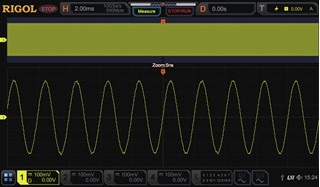
The maximum 8 GSa/s sample rate provides a high sampling-to-bandwidth ratio for detailed signal acquisition.
- 8 GSa/s with one active channel
- 4 GSa/s per channel in half-channel mode
- 2 GSa/s per channel with four active channels
- Real-time sampling architecture
- Peak detection of glitches as narrow as 500 ps
Up to 200 Mpts Optional Memory
The standard memory reaches 100 Mpts in single-channel operation. An optional memory licence expands it to 200 Mpts.
Deep memory is useful for:
- Long serial bus transactions
- Extended power start-up sequences
- Detailed zoom and navigation
- Intermittent fault analysis
- Long-duration signal observation
More Than 500,000 wfms/s Capture Rate
A high waveform update rate improves visibility into infrequent events that may not appear during slower acquisition.
It helps detect:
- Short glitches
- Runt pulses
- Unstable edges
- Timing violations
- Signal dropouts
- Occasional waveform distortion
450,000-Frame Hardware Recording
The segmented recording system stores triggered waveform events while excluding unnecessary dead time between events.
Recorded waveforms can be:
- Played continuously
- Reviewed frame by frame
- Measured after acquisition
- Mathematically analysed
- Protocol decoded
- Compared for intermittent changes
16-Channel Logic Analyser Capability
With the optional PLA2216 logic probe, the MSO5354 supports up to 16 digital inputs alongside four analog channels.
- Up to 20 mixed analog and digital channels
- 1 GSa/s digital sampling
- 25 Mpts digital memory
- Adjustable logic thresholds
- Parallel bus decoding
- Mixed-signal triggering
Seven Instrument Functions in One Platform
Depending on the installed options and accessories, the MSO5354 platform combines:
- Digital oscilloscope
- Logic analyser
- FFT-based spectrum analyser
- Arbitrary waveform generator
- Digital voltmeter
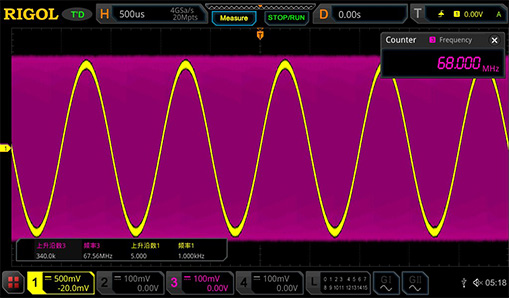
- Frequency counter and totaliser
- Protocol analyser
The logic probe, waveform-generator activation, protocol packages and certain analysis functions may be sold separately.
Hardware Full-Memory Measurements
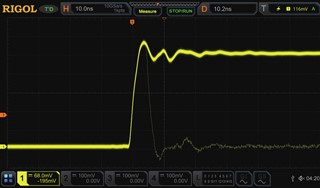
The oscilloscope measures 41 waveform parameters and supports statistics for up to ten measurements.
Measurement categories include:
- Voltage
- Time
- Frequency
- Pulse width
- Duty cycle
- Rise and fall time
- Delay
- Phase
- Overshoot and preshoot
Enhanced FFT Analysis
The built-in FFT function supports:
- Up to 1 Mpts FFT processing
- Centre frequency and span controls
- Start and stop frequency controls
- Automatic detection of up to 15 peaks
- Frequency and amplitude tables
- Multiple FFT window functions
- Colour persistence display
Touch-Based Zone Trigger
The user can draw one or two rectangular areas on the touchscreen and define whether the waveform must intersect or avoid each area.
Zone triggering helps isolate:
- Abnormal waveform transitions
- Overshoot events
- Intermittent noise
- Unstable pulses
- Rare signal patterns
Hardware Pass/Fail Testing
The standard pass/fail function compares the input waveform against a user-defined mask.
A pass or failure can:
- Stop acquisition
- Activate the beeper
- Save a screenshot
- Generate an AUX output pulse
- Continue monitoring for statistical analysis
Optional Protocol Decoding
Protocol analysis packages are available separately for communication, embedded, automotive, audio and aerospace applications.
- RS232/UART
- I2C and SPI
- CAN and LIN
- FlexRay
- I2S
- MIL-STD-1553
The current official MSO5000 documentation does not list CAN FD decoding for this model.
Optional Dual-Channel AWG
The MSO5000-AWG option activates two waveform-generator channels.
- 25 MHz maximum sine frequency
- 200 MSa/s sample rate
- 14-bit vertical resolution
- Modulation, sweep and burst
- Standard and arbitrary waveforms
- Bode plot support
9-Inch Capacitive Touchscreen
The 9-inch display offers:
- 1024 × 600 resolution
- Multi-touch gesture control
- 256 intensity levels
- Colour persistence
- Dedicated physical knobs and keys
- Search and navigation controls
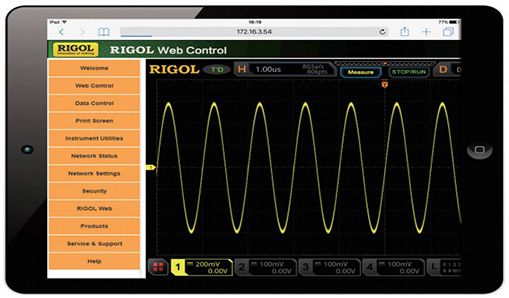
Remote Control and Automation
The MSO5354 supports browser-based remote operation and computer-controlled testing.
Available connectivity includes:
- USB Host
- USB Device
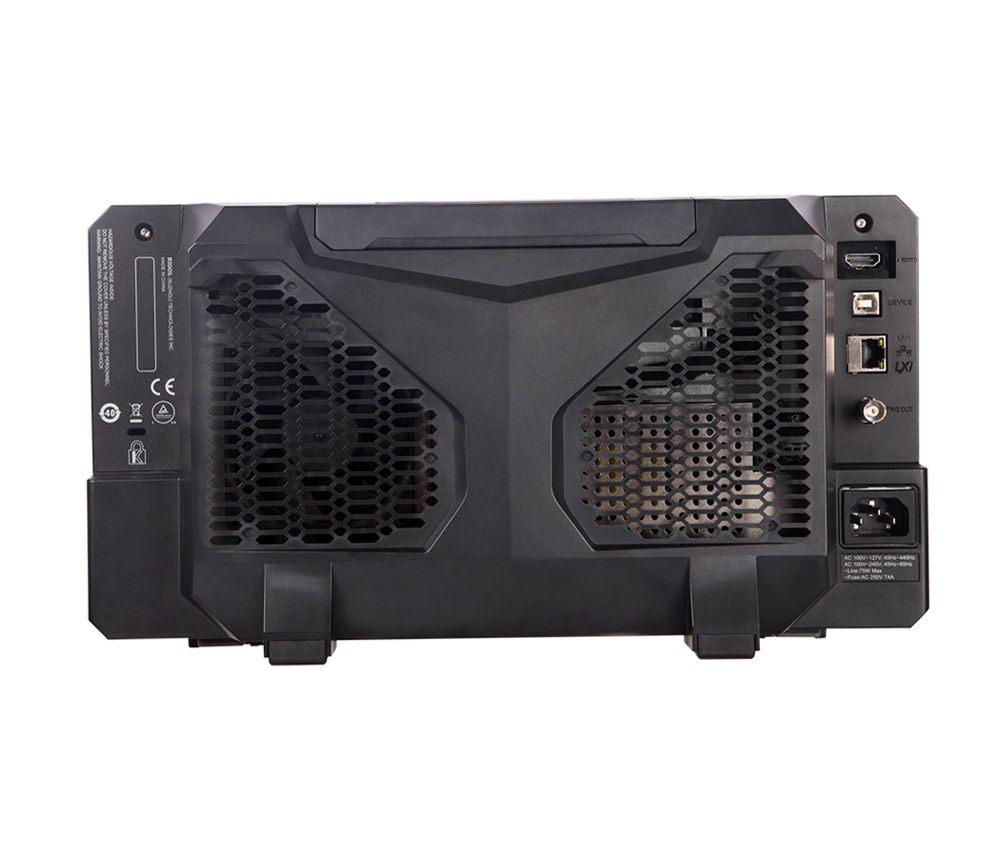
- Gigabit LAN
- LXI-C
- HDMI output
- AUX trigger and pass/fail output
- Optional USB-to-GPIB connectivity
- SCPI and IEEE 488.2 command support
- VNC-based Web Control