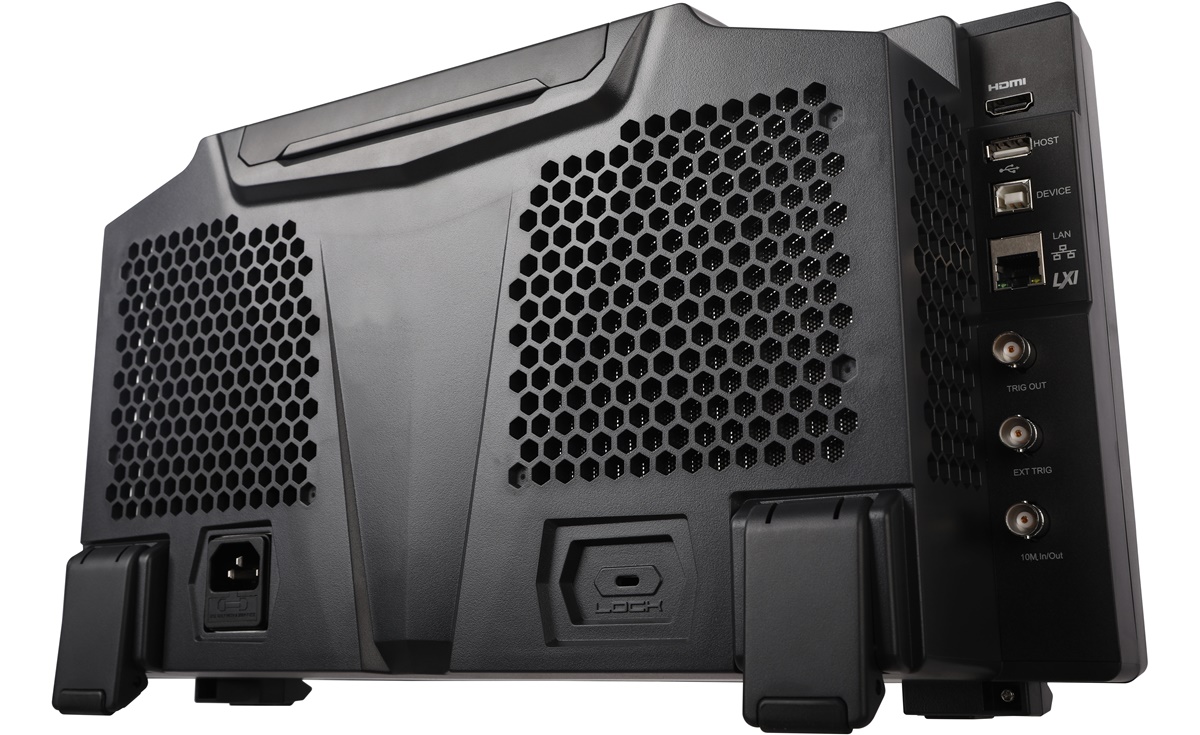
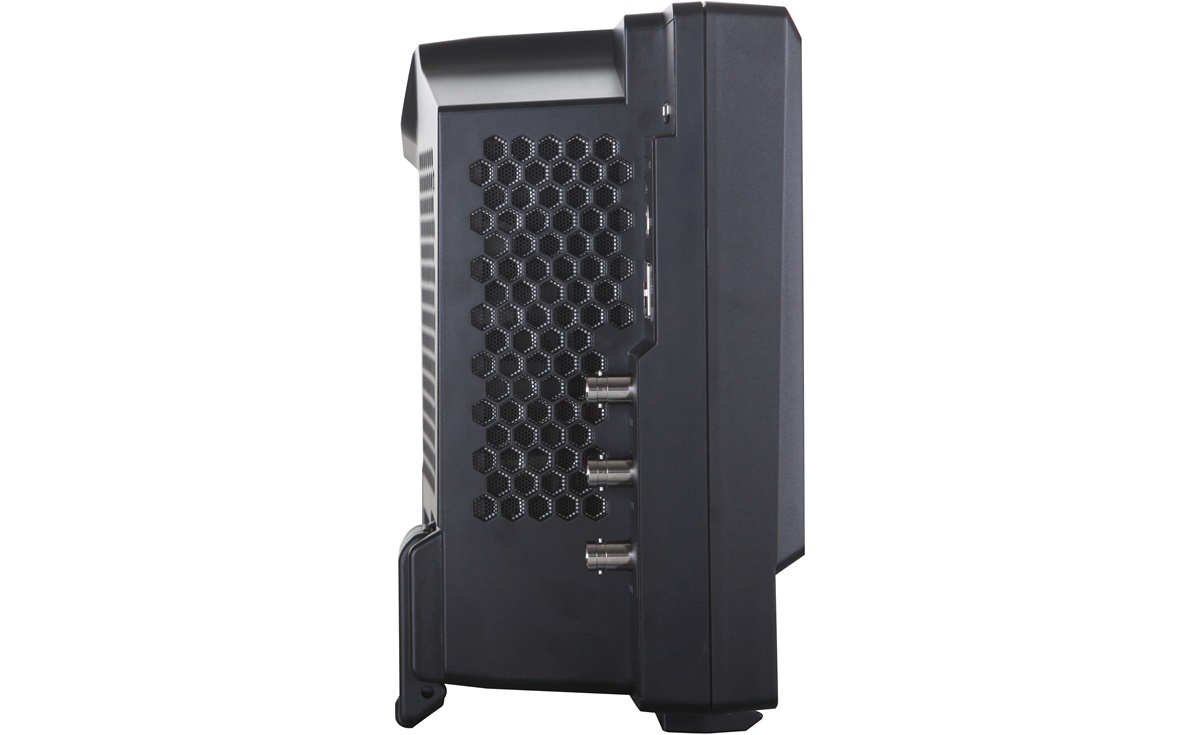
2.1 High-Resolution Multi-Touch Display (10.1")
Enjoy intuitive control via capacitive gestures or traditional knobs. The screen is optimized for fast navigation in complex debugging sessions.
2.2 Real-Time Eye Diagram Analysis
Instantly visualize signal quality metrics such as eye width, height, amplitude, and Q factor. Supports automatic and manual clock recovery with advanced PLL configurations.
2.3 Jitter Measurement Suite
Identify clock irregularities through TIE, cycle-to-cycle jitter, and pulse width variations. Ideal for timing-sensitive embedded and comms applications.
2.4 Optimized Sample-to-Bandwidth Ratio
The MSO8104 delivers a real-time 10 GSa/s sample rate, offering 10x coverage per GHz bandwidth — critical for capturing fast rise-time signals.
2.5 Ultra-Fast Waveform Update Rate
With a capture rate of 600,000 wfms/s, engineers can detect and diagnose elusive glitches and anomalies during design and validation.
2.6 256-Level Color Grading with Persistence
Spot signal frequency and event rarity visually. Graded intensity and persistence help highlight irregular patterns over time.
2.7 Full-Memory Auto Measurements
Analyze 41 waveform parameters at hardware-accelerated speeds. Compare 10 concurrent results with integrated statistics display.
2.8 Advanced Histogram Analysis
Examine clock jitter (horizontal), signal noise (vertical), and long-term signal distribution (measurement histograms) for deeper insight.
2.9 Built-in Pass/Fail Mask Testing
Use user-defined waveform masks to automate compliance and QA verification for repeated or long-term signal tests.
2.10 Enhanced FFT Spectrum Analysis
Capture and analyze 1 Mpts of FFT data to resolve fine frequency details, noise sources, or EMC-related issues with configurable spans and ranges.
2.11 Protocol Triggers and Decoding
Simultaneously decode up to four buses including SPI, I2C, UART, CAN, FlexRay, I2S, and MIL-STD-1553. Powerful trigger options enhance capture precision.
2.12 Deep Memory Search & Navigation
Quickly locate critical events using smart search, bookmarks, and guided navigation — especially useful with large waveform datasets.