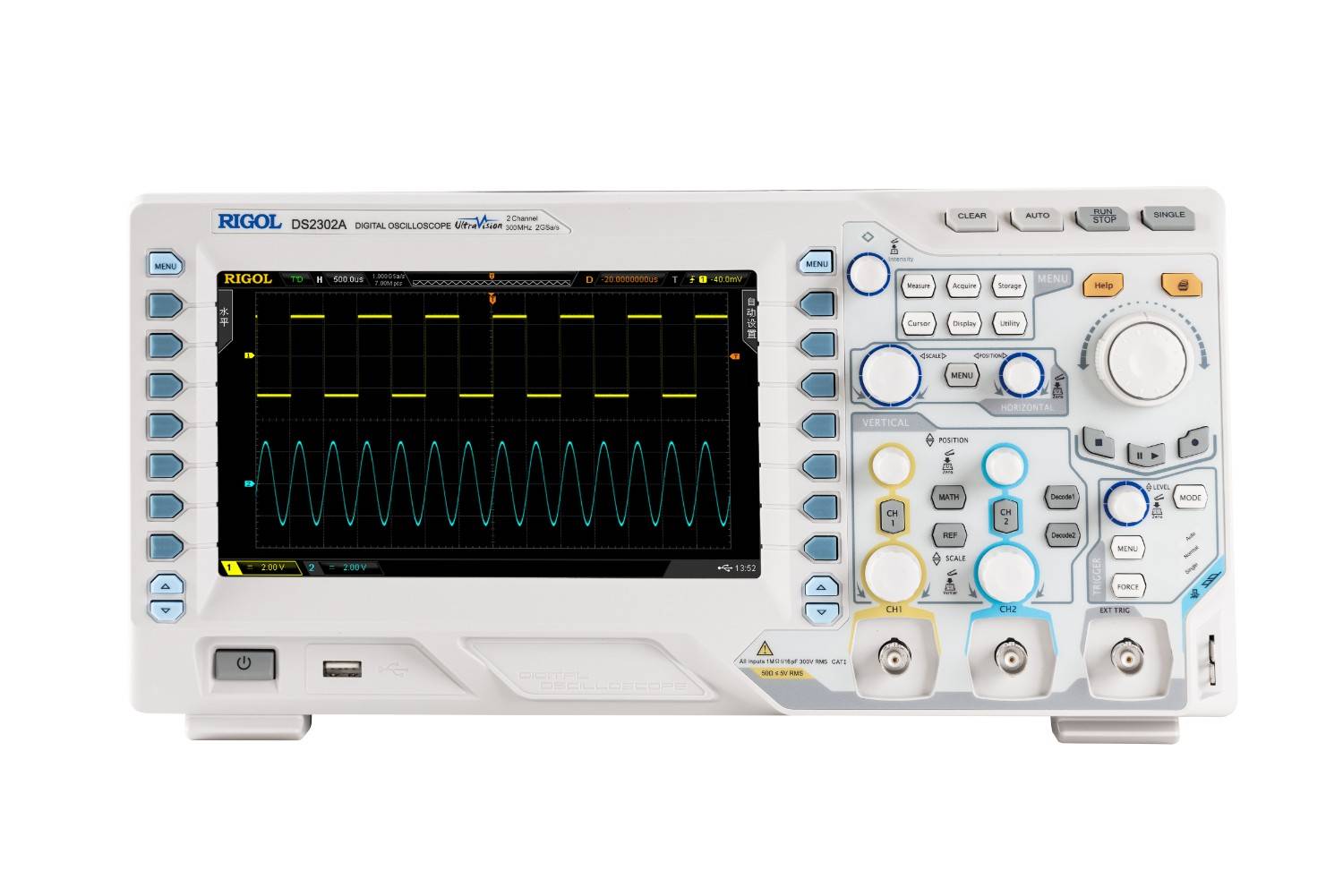
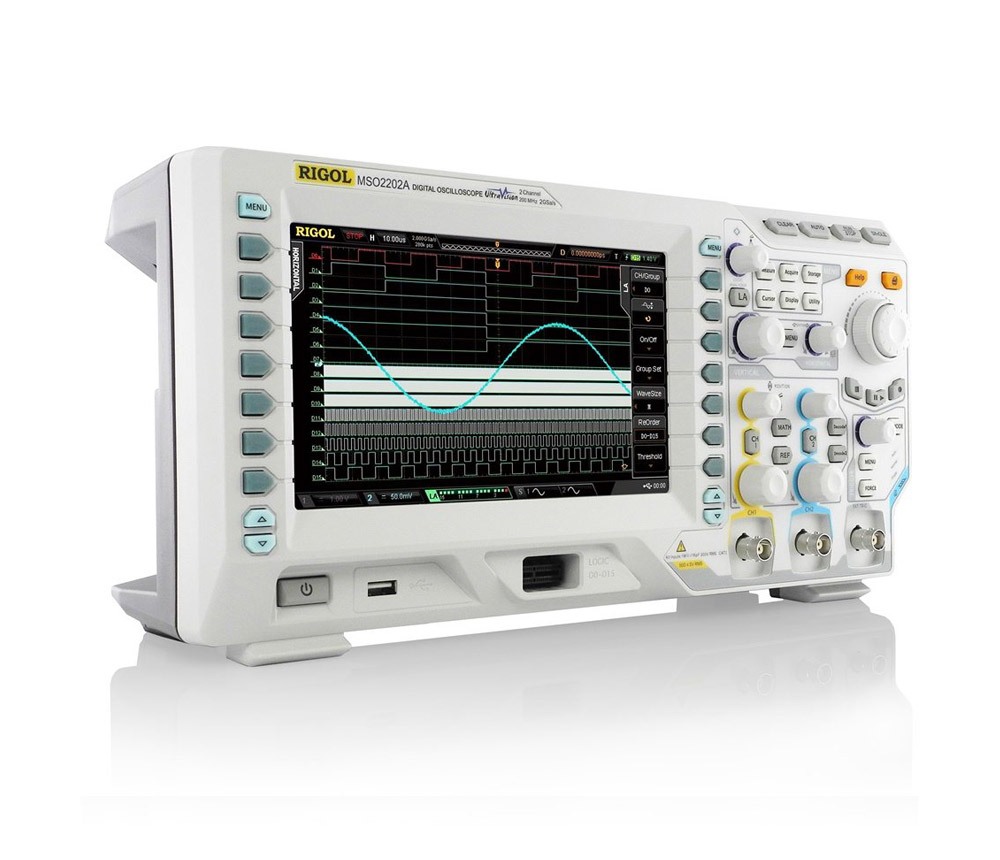
The RIGOL DS2302A Digital Oscilloscope is the highest-bandwidth digital-only model in the RIGOL DS2000A Series. It combines 300 MHz analogue bandwidth, two analogue input channels and fast real-time sampling for engineers, technicians, laboratories and electronics service teams working with higher-frequency digital, analogue and power signals.
The oscilloscope uses RIGOL UltraVision technology to provide deep acquisition memory, intensity-graded waveform display, high waveform capture rates and hardware waveform recording. These capabilities help users capture both repetitive signals and occasional abnormalities such as glitches, runt pulses, unstable edges and timing errors.
300 MHz Analogue Bandwidth
The DS2302A provides 300 MHz bandwidth across two analogue channels using the 50 Ω input path. Its calculated rise time is approximately 1.2 ns, making it suitable for observing faster edges than the DS2102A and DS2202A models.
Typical applications include:
- High-speed embedded-system debugging
- Clock and pulse measurements
- FPGA and microcontroller testing
- Communication interface analysis
- Switching power-supply testing
- PWM signal measurements
- Analogue amplifier testing
- Sensor and controller analysis
- Signal-integrity troubleshooting
- Production and quality validation
-
Two-Channel Waveform Analysis
The two analogue channels allow users to examine related signals at the same time.
Common measurements include:
- Input versus output
- Clock versus data
- Voltage versus current
- Reference signal versus measured signal
- Gate-drive signal versus switching output
- Sensor input versus controller response
- Phase and delay between two waveforms
- Power-supply input and output behaviour
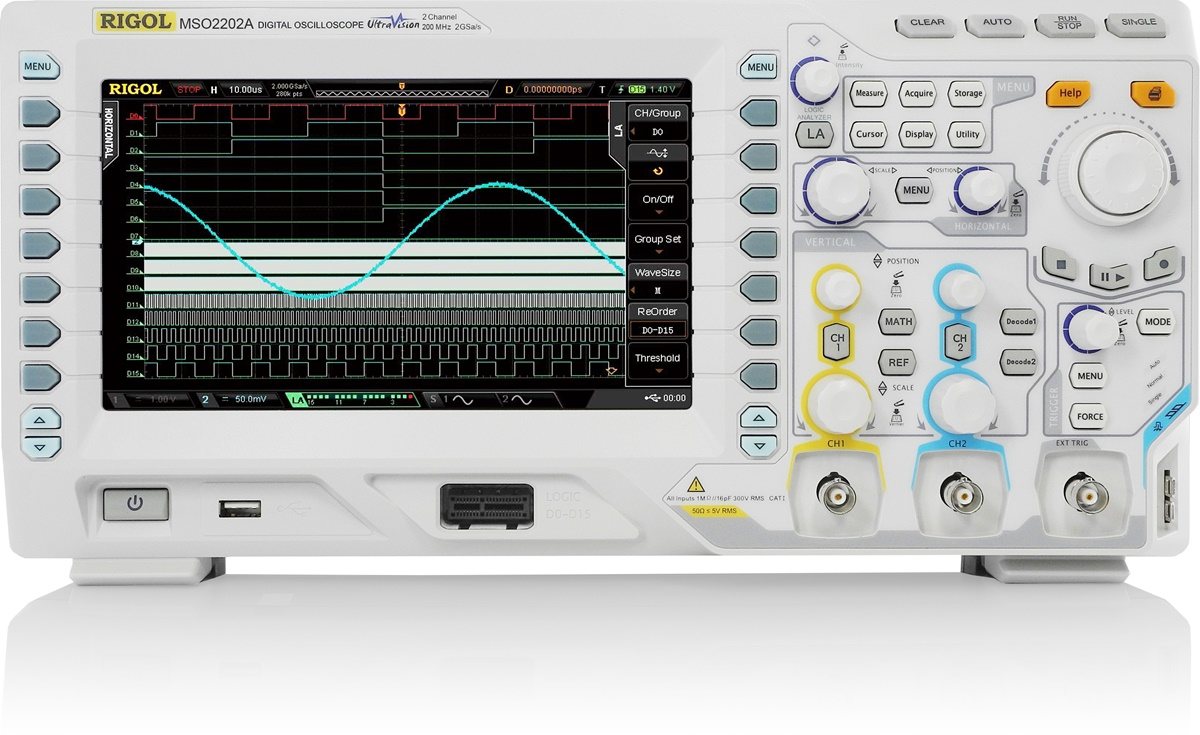
The DS2302A includes two analogue inputs only. It does not include the 16 digital channels provided by MSO2302A models.
Real-Time Sampling Performance
The DS2302A provides channel-dependent sampling:
- 2 GSa/s with one analogue channel active
- 1 GSa/s per channel with both analogue channels active
Higher sampling density provides more measurement points across fast signal transitions. This helps improve waveform reconstruction and provides better visibility into overshoot, ringing, pulse variation and narrow transient events.
Peak-detect capability can capture pulses as narrow as:
- Approximately 500 ps in single-channel operation
- Approximately 1 ns in dual-channel operation
-
Deep Acquisition Memory
The oscilloscope provides 14 Mpts standard maximum memory depth in single-channel operation.
Standard memory allocation:
- 14 Mpts with one active channel
- 7 Mpts per channel with both channels active
The optional MEM-DS2000 licence expands memory to:
- 56 Mpts with one active channel
- 28 Mpts per channel with both channels active
Deep memory allows longer signal captures while maintaining a useful sample rate. This is valuable for:
- Serial communication analysis
- Long pulse-train observation
- Power-supply start-up sequences
- Intermittent fault investigation
- Embedded-system timing analysis
- Communication packet testing
- Long-duration waveform monitoring
The 56 Mpts memory should be presented as optional unless the licence is installed on the supplied instrument.
Fast Waveform Capture
The DS2302A provides a maximum waveform capture rate of up to 52,000 waveforms per second in dots-display mode.
This improves the probability of detecting occasional waveform problems, including:
- Short glitches
- Runt pulses
- Timing violations
- Signal dropouts
- Unstable waveform edges
- Intermittent electrical noise
- Abnormal pulse widths
- Occasional communication faults
The intensity-grading display uses up to 256 levels to show how frequently different waveform events occur.
Waveform Recording and Playback
The oscilloscope supports hardware waveform recording, playback and analysis for up to 65,000 frames.
This function allows engineers to:
- Record successive waveform events
- Replay captured activity
- Review frames individually
- Compare normal and abnormal signals
- Perform post-acquisition measurements
- Investigate intermittent faults
- Identify signal behaviour preceding a failure
Waveform recording is a standard function on the DS2302A.
Low-Level Signal Measurement
The DS2302A offers vertical sensitivity down to 500 µV/div.
Vertical ranges include:
- 500 µV/div to 10 V/div at 1 MΩ
- 500 µV/div to 1 V/div at 50 Ω
This range supports measurements of:
- Sensor signals
- Amplifier outputs
- Power-supply ripple
- Reference voltages
- Low-amplitude analogue waveforms
- General electronic circuits
The 500 µV/div range uses digital amplification based on the 1 mV/div setting and should be considered accordingly during precision measurements.
Selectable Input Impedance
The oscilloscope provides:
- 1 MΩ input for general-purpose voltage measurements
- 50 Ω input for correctly terminated higher-frequency signals
Maximum permitted input voltage differs between the two impedance settings. Appropriate probes and termination must be used for safe and accurate measurements.
Bandwidth Limiting
The DS2302A provides selectable bandwidth limits of:
- 20 MHz
- 100 MHz
- Full 300 MHz bandwidth
Bandwidth limiting can reduce high-frequency noise when full bandwidth is not required.
This is useful for:
- Power-supply ripple measurement
- Sensor signal analysis
- Low-frequency analogue testing
- Noise reduction
- Cleaner waveform viewing
-
Trigger Functions
The DS2302A provides several standard trigger modes for isolating specific waveform conditions.
Standard trigger functions include:
- Edge
- Pulse width
- Slope
- Pattern
- Runt
- Setup and hold
- Standard video
Optional advanced trigger functions include:
- Window
- Nth edge
- HDTV
- Delay
- Timeout
- Duration
- USB trigger
The optional functions require the AT-DS2000 licence.
Serial Protocol Analysis
The DS2302A supports optional serial bus decoding and analysis.
Available options include:
The SD-DS2000 option activates RS232/UART, I2C and SPI decoding. The CAN-DS2000 option provides CAN triggering and decoding.
Protocol analysis displays decoded communication data alongside the electrical waveform, helping engineers identify:
- Invalid data
- Timing problems
- Communication interruptions
- Incorrect voltage levels
- Noise-related errors
- Physical-layer faults
These protocol functions should not be listed as standard unless the required licences are included.
Waveform Measurements and Analysis
The DS2302A provides automatic measurements and analysis functions for routine engineering work.
Available functions include:
- Voltage measurements
- Frequency and period
- Rise and fall time
- Pulse-width measurements
- Duty-cycle measurements
- Phase and delay
- Cursor measurements
- Measurement statistics
- Waveform mathematics
- FFT frequency-domain analysis
- Digital filtering
- Reference waveform comparison
- Pass/fail testing
High-resolution acquisition can provide up to 12-bit processing under supported time-base and sample-rate conditions.
FFT Frequency-Domain Analysis
The integrated FFT function converts acquired time-domain waveforms into frequency-domain information.
Typical applications include:
- Harmonic analysis
- Switching-frequency measurement
- Clock-spectrum evaluation
- Noise-source identification
- EMI troubleshooting
- Detection of unwanted oscillations
- Analogue amplifier analysis
The FFT function is suitable for general troubleshooting and design analysis, but it does not replace a dedicated spectrum analyser for demanding RF measurements.
Pass/Fail Testing
Mask-based pass/fail testing allows acquired waveforms to be compared against user-defined tolerance limits.
It can support:
- Production testing
- Quality validation
- Waveform stability monitoring
- Component comparison
- Detection of signal deviations
- Repetitive inspection tasks
The AUX output can provide a trigger or pass/fail signal for external equipment.
Display and User Interface
The DS2302A includes an 8-inch TFT colour display with 800 × 480 resolution.
Display features include:
- 160,000 colours
- Up to 256 intensity levels
- Dots and vector display modes
- Adjustable waveform persistence
- Y-T, X-Y and Roll modes
- Search and navigation
- Dedicated front-panel controls
- Real-time clock
-
Connectivity and Automated Testing
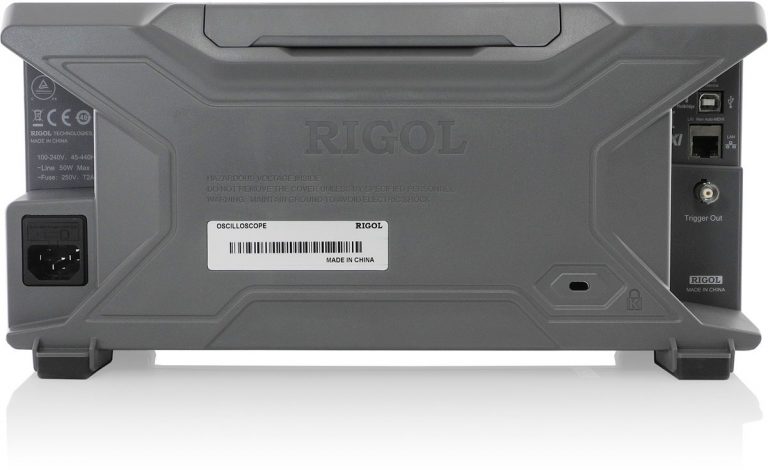
The oscilloscope supports computer communication, laboratory networking and automated test-system integration.
Connectivity includes:
- USB Host
- USB Device
- LAN
- LXI
- AUX output
- Trigger or pass/fail output
- Optional USB-to-GPIB adapter
Remote programming can be used for production testing, repetitive validation and automated data collection.
Applications
The RIGOL DS2302A is suitable for:
- Embedded-system development
- FPGA and microcontroller debugging
- High-speed digital circuit testing
- Analogue circuit analysis
- Power-supply testing
- PWM signal analysis
- Communication interface testing
- CAN bus analysis with optional software
- Sensor and actuator testing
- Signal-integrity troubleshooting
- Electronic equipment maintenance
- Production-line inspection
- Quality-control testing
- Research and development
- Educational laboratories
- Service and repair work
-
Why Buy from RevineTech?
RevineTech provides professional test and measurement equipment for engineering, industrial, research, production and educational applications.
Technical product-selection assistance can include:
- DS2302A configuration
- Memory upgrade requirements
- Advanced trigger options
- Serial decoding licences
- CAN analysis software
- Passive and active probe selection
- High-voltage differential probes
- Current probes
- Calibration requirements
- Rack-mount accessories
- Automated test integration