
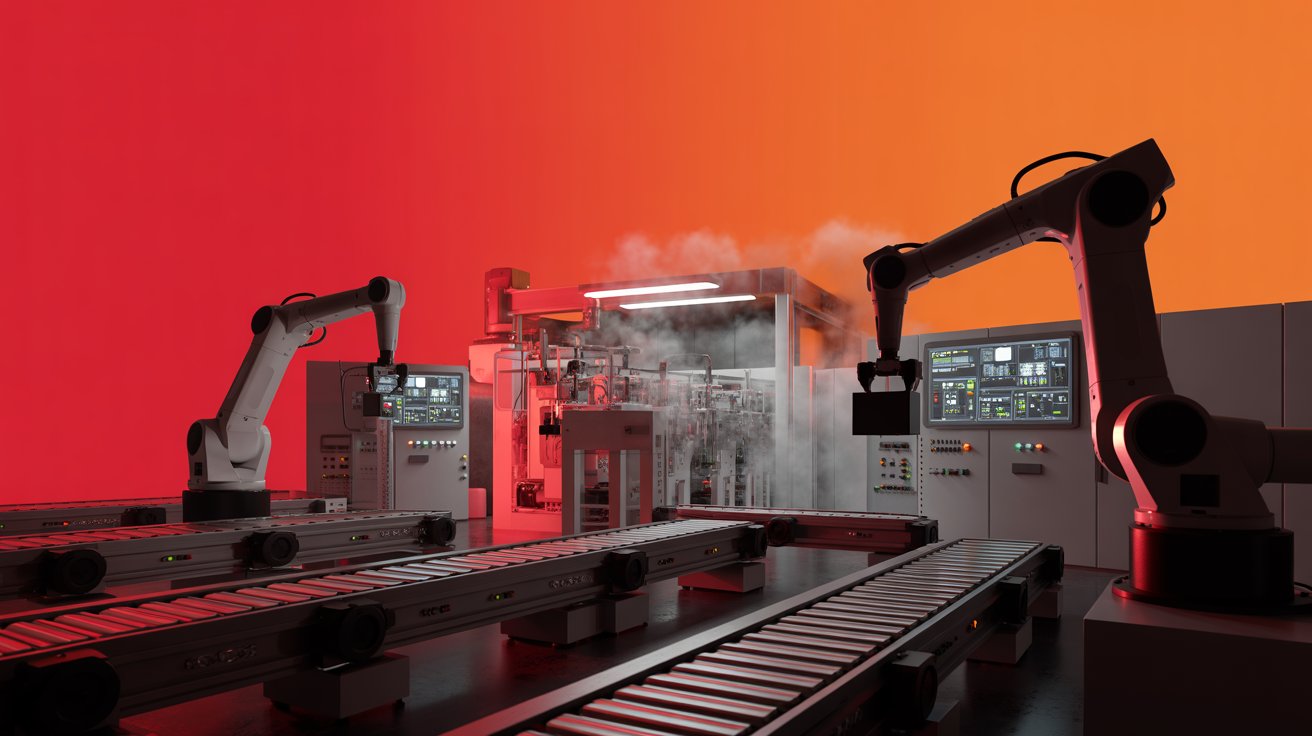
Picture a massive manufacturing plant in Chennai during the peak summer heat. The production line produces 500 car parts every hour. Suddenly, a robotic arm stutters. The main conveyor belt stops completely. Sirens flash across the factory floor. The maintenance team rushes in with standard multimeters. They test the power lines, but everything reads normally. They restart the system, and it runs fine for exactly two hours before crashing again. They lose thousands of dollars in production time. The actual culprit? A massive variable frequency drive (VFD) on the other side of the building injects invisible, high-frequency electrical noise into the sensor ground wire. The maintenance team cannot see this noise because they use the wrong tools.
Industrial automation testing is the rigorous process of verifying sensors, controllers, and communication networks under extreme physical and electrical stress to ensure uninterrupted operation in harsh manufacturing environments.
The Brutal Reality of Factory Floor Electronics
What most people don’t realize is that an R&D laboratory and a factory floor exist in two completely different universes. In your clean, air-conditioned lab, you test pristine prototypes. On the factory floor, your electronics face extreme heat, heavy vibration, and massive electromagnetic interference.
Indian manufacturers rapidly adopt Industry 4.0 standards. You integrate smart sensors, complex motor drives, and real-time network controllers. When you deploy these sensitive systems into harsh environments, they fail unless you test them properly. You cannot rely on basic multimeters. You require advanced test and measurement products to uncover the invisible forces destroying your hardware. Modern factories demand robust industrial electronics testing equipment to maintain continuous uptime.
Here’s the Surprising Truth About Electrical Noise
Heavy machinery creates a chaotic electrical environment. Large industrial motors and variable frequency drives generate severe electrical transients. These transients travel through power lines. They jump across poorly shielded cables.
When you use standard electronic lab testing equipment, you often miss this noise. A standard digital multimeter only measures the average voltage. It averages out the fast voltage spikes. You need high-speed electronic measurement instruments to capture these sub-microsecond transients. If you do not capture them, these spikes easily destroy sensitive microcontrollers and corrupt data networks.
Upgrading Your Troubleshooting Arsenal
When you upgrade your troubleshooting capabilities, you stop guessing. You start identifying the root cause of the failure. You must build a comprehensive suite of test and measurement solutions.
A comprehensive test bench setup. Source: Wikipedia
Stop Relying on Basic Tools: The Need for Speed
Every maintenance team needs reliable oscilloscopes and spectrum analyzers. An oscilloscope displays the exact shape of a voltage waveform over time. It shows you the high-frequency ringing on a motor drive output.
However, you must choose the right scope. Industrial environments require electronics testing solutions with deep memory and fast capture rates. When a robotic arm fails intermittently, you must record the sensor data over a long period. High-resolution oscilloscopes allow you to capture hours of data without losing the tiny, high-frequency details. This level of detail remains essential for automotive electronics testing solutions, where electric vehicle components face similar harsh conditions.
The Lethal Mistake of Ignoring Galvanic Isolation
You must measure high voltages safely. Factory environments often involve 480-volt or 600-volt three-phase power systems. If you connect a standard oscilloscope probe to a high-voltage motor drive, you will likely cause a massive short circuit. You might destroy the instrument. You might seriously injure yourself.
You must use isolated input channels or high-voltage differential probes. These precision electronic instruments isolate the measurement circuit from the dangerous earth ground. They allow you to measure high common-mode voltages safely. This safety factor represents a critical aspect of electronic test and measurement equipment designed specifically for heavy industry.
Advanced Systems for Complex Automation
Modern factories do not just use simple relays. They use advanced computers. You must test these complex systems comprehensively.
Capturing the Big Picture with ATE Automation Systems
When you build complex industrial control panels, manual testing takes too long. Human error causes defects. You need to automate the testing process.
You should implement ATE automation systems (Automated Test Equipment) on your production line. These systems connect directly to your hardware. They run hundreds of precise test sequences in seconds. To feed data into these systems, you need reliable data acquisition systems India.
Data Acquisition System Architecture. Source: IQS Directory
A robust data acquisition system monitors temperature, pressure, vibration, and voltage simultaneously. It streams this data to a central computer for analysis. This integrated approach provides the most reliable test and measurement solutions for high-volume manufacturing.
Validating the Brain: AI at the Edge
Factories now deploy artificial intelligence directly on the manufacturing floor. They use AI edge processors India to analyze camera feeds, predict machine failures, and optimize production speed.
Testing these smart devices requires specialized embedded systems and design tools. You must verify that the AI processor receives clean power despite the noisy factory environment. You must use high-bandwidth PCB testing and measurement tools to ensure the high-speed memory interfaces do not suffer from signal integrity issues. You also need dedicated semiconductor testing solutions to verify these chips operate correctly under extreme industrial temperatures.
Battling Interference and Maintaining Accuracy
You cannot control the electrical noise in a factory. However, you can control how your equipment reacts to it. You must also ensure your testing tools remain accurate over time.
Why You Must Adopt EMI EMC Testing Solutions
Electromagnetic interference (EMI) causes massive headaches in smart factories. A poorly shielded cable acts like an antenna. It broadcasts radio frequency noise across your facility. This noise disrupts wireless sensor networks and crashes delicate controllers.
You must integrate EMI EMC testing solutions into your workflow. Before you deploy a new control panel, you should scan it for emissions. You need high-quality RF test equipment, including near-field probes and spectrum analyzers.
By utilizing proper RF and wireless testing equipment, you identify the source of the noise immediately. You can add ferrite beads or improve shielding before the panel reaches the factory floor. According to guidelines by the International Electrotechnical Commission (IEC), strict compliance with EMI standards prevents catastrophic industrial failures.
The Hidden Danger of Drifting Measurements
Your testing equipment faces harsh conditions, too. You move oscilloscopes across the factory floor. You expose multimeters to extreme heat and humidity. These environmental factors degrade the internal components of your instruments.
Over time, your measurements drift. An instrument that reads 24 volts today might read 23.5 volts next year. If you rely on drifting data, you make bad engineering decisions.
You must prioritize calibration services for electronics. You cannot ignore this step. You must send your industrial electronics testing equipment to an accredited laboratory regularly. Proper calibration guarantees your instruments provide accurate, traceable data. It ensures your electronic measurement instruments remain trustworthy year after year.
Standard vs. Industrial Gear: A Quick Comparison
Use this table to understand the vital differences between standard lab equipment and industrial-grade testing tools.
| Feature | Standard Lab Equipment | Industrial Testing Equipment |
|---|---|---|
| Enclosure Rating | Open vents, no dust protection | IP-rated, dust and water resistant |
| Input Isolation | Shared earth ground | Isolated channels, differential inputs |
| Safety Category | CAT I / CAT II | CAT III / CAT IV for high-voltage transients |
| Portability | Heavy, requires wall power | Battery-powered options, rugged casing |
| Noise Filtering | Basic filters | Advanced low-pass filters for VFD noise rejection |
Conclusion
Troubleshooting industrial automation systems requires a completely different mindset than standard laboratory work. You face extreme electrical noise, high voltages, and harsh environments. You cannot solve these complex problems using outdated or inadequate tools.
You must equip your maintenance and R&D teams with advanced test and measurement products. By investing in high-resolution oscilloscopes, isolated differential probes, and robust data acquisition systems, you gain total visibility into your factory networks. You catch the invisible transients that destroy your hardware. Furthermore, by maintaining your gear through accredited calibration, you ensure your data remains flawless.
At Revine Tech, we understand the brutal reality of the factory floor. We provide comprehensive test and measurement solutions, rugged industrial equipment, and expert calibration services to keep Indian manufacturing plants running smoothly.
Are you ready to stop fighting invisible electrical noise and take total control of your industrial automation systems today?